
Transponder Keys in Newmarket — Chips Cut, Cloned and Programmed
The chip in the head of your key is what lets the engine run. We cut it, clone it or program it at your vehicle, and we will tell you which of those three your car actually needs.
Quick answer
A transponder key carries a small battery-free chip in its plastic head that answers a challenge from your vehicle immobiliser. Without a matching chip the engine cranks and immediately dies. In Newmarket a transponder key cut and programmed at your vehicle typically costs $150 to $230, or $90 to $160 if the chip can simply be cloned from a working key.
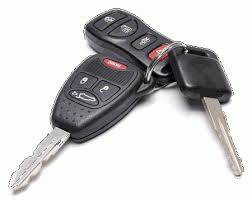
Almost every vehicle sold in Canada since 1998 has a chip in the key. You cannot see it, it has no battery, and for most of its life it does nothing you notice. Then one day a key gets lost or a cheap copy fails, and the transponder becomes the single most expensive component of a very small piece of plastic.
A transponder key in Newmarket is not always a replacement job. Sometimes the chip can be copied straight off a working key for well under half the price of programming a new one. Sometimes it cannot, and anybody promising otherwise before knowing your model is guessing.
This page covers the chip itself: what it is, how to tell whether your key has one, the real difference between cloning and programming, and the two symptoms that give a transponder fault away from the driver seat. The wider job of replacing a lost key is on our car key replacement page.
What a transponder is, in one paragraph
It is a passive radio tag, and it is simpler than most people assume.
Transponder is a compression of transmitter and responder. Inside the head of your key sits a glass capsule or a small carbon block containing a tiny antenna coil and a chip. There is no battery and there never was one. The coil around your ignition barrel throws out a brief magnetic field when you turn the key on, that field induces enough current in the chip to power it for a fraction of a second, and in that moment the chip answers.
The vehicle immobiliser listens for that answer. If it matches something on its accepted list, the engine control unit is allowed to fuel and fire. If it does not, the ECU kills fuel or spark within a revolution or two. That is why a car with the wrong chip cranks strongly, catches for half a second, and dies.
Because the chip has no power source of its own, it does not wear out, run flat or need servicing. A transponder key that has been in a drawer since 2009 will still answer perfectly. What fails is the plastic head cracking, the blade wearing, or the chip working loose inside the head. That last one produces an intermittent no-start that drives people to replace perfectly good parts.
Buttons are a separate system entirely. Lock, unlock and trunk run through a battery-powered remote circuit, which is why a dead key fob battery stops the doors from responding while the car still starts normally. The chip and the buttons fail independently of each other.
How to tell whether your key has a chip
Four checks, none of which need a tool.
Check the model year
Vehicles built before roughly 1996 almost never have a transponder. From 1998 to 2002 it became near universal across the mainstream makes. If your car is a 2003 or later, assume there is a chip until proven otherwise.
Look at the head of the key
A chipped key has a thick moulded plastic head, usually with a manufacturer logo. A pure mechanical key is often all metal, or has a thin plastic cap you can see through the sides of. Thickness is a decent first clue.
Try the doors versus the ignition
If a copied key opens your doors and turns the ignition but the engine will not stay running, that key is mechanically correct and electronically blank. That is a chip problem and nothing else.
Watch the dash on the way to start
Most immobiliser-equipped vehicles show a small icon of a car with a key inside it, or a padlock, that lights briefly and then goes out when a valid chip is recognised. If it stays on or flashes, the chip was not accepted.
- A key that starts the car has a working chip in it, whatever it looks like.
- A key that turns smoothly but leaves the engine dying on start is missing or has a rejected chip.
- A hardware store copy of a chipped key is a valet key, not a spare. It opens doors, it will not drive.
- Some vehicles were sold with a genuine chip-free valet or trunk key. Those are real and they were never meant to start the car.
Cloning versus programming, and the chip families behind the difference
These are two completely different operations that produce a working key, and they cost different amounts because they involve different amounts of work.
Cloning copies the identity of your existing key onto a blank chip. The car is never connected to anything. Afterwards the vehicle sees two keys carrying the same number and cannot tell them apart. It is quicker, cheaper, and it never touches your immobiliser list. The catch is that it needs a working key to copy from, and it only works on chip families that allow their identity to be read and written.
Programming adds a genuinely new identity to the vehicle accepted list, which requires connecting to the car. It works with no existing key, it works on chips that refuse to be cloned, and it is the only path on most vehicles built in the last decade. Our car key programming page goes through how that connection is made.
Early fixed-code chips
Mid-1990s to early 2000s. The chip broadcasts one unchanging number. These clone easily and quickly, often in under ten minutes on the tailgate of the van.
Crypto chips
From roughly the early 2000s. The chip does a calculation on a challenge sent by the car rather than reciting a fixed number. Some of these can still be cloned with the right equipment. Many cannot, and the split does not follow brand lines neatly.
Recent generation chips
Broadly from the 2010s onward. Stronger encryption and, on many models, no practical cloning route at all. These are add-to-the-vehicle jobs only.
Which one you have
Depends on make, model, build year and sometimes on which plant assembled the car. Two identical-looking keys from the same model year can use different chips. This is why the year, make and model question is not small talk.
The practical upshot: if you still have a key that starts the car, always ask about cloning first, because when it is possible it is the cheapest key you will ever buy. If you have no working key, cloning is off the table by definition and the job becomes an origination.
The two symptoms that point straight at the chip
Crank and die is the classic. You turn the key, the starter spins the engine with full strength, it fires and runs for roughly half a second to two seconds, then cuts out cleanly. No spluttering, no rough running, just a clean stop. That is fuel or spark being switched off deliberately, and on a modern car deliberate means the immobiliser.
The second is the security light. Every immobiliser-equipped vehicle has an indicator, usually a car outline with a key or a padlock inside it. In normal operation it flickers for a second at key-on and goes out. When the chip is rejected it stays on solid or flashes steadily, and on many makes it keeps flashing after the key is removed, which is simply the system telling you it is armed.
If both of those are present, the chip is almost certainly the problem, and a new blade cut from your key code will not fix it. If neither is present, look elsewhere. An engine that turns over and never catches at all is usually fuel, spark or a sensor, and a key that will not physically rotate points at the ignition cylinder instead.
- Crank and immediate clean stall: immobiliser rejecting the chip.
- Security or immobiliser light solid or flashing at key-on: chip not recognised.
- Chip loose inside a cracked key head: intermittent no-start that comes and goes with how you hold the key.
- Doors unlock, engine will not stay running: buttons work, chip does not.
- Nothing at all happens when you turn the key: not a chip fault, look at the barrel, the battery or the switch.
Transponder key prices in Newmarket
Cloning is cheaper than programming wherever your chip family allows it. Ask on the phone.
| Job | What it covers | Typical range |
|---|---|---|
| Transponder key cloned from a working key | Chip identity copied to a blank, vehicle not connected | $90 – $160 |
| Chip only, fitted to a key you already own | Correct chip sourced and paired to the vehicle | $80 – $150 |
| Transponder key cut and programmed | Blade cut to your lock code, chip paired on site | $150 – $230 |
| Remote head transponder key | Blade, chip and remote buttons in one unit | $180 – $290 |
| Extra transponder key at the same visit | Each additional key while the tool is already connected | $60 – $120 |
| All keys lost, transponder originated | Key made from the lock or key code, then programmed in | $220 – $400 |
| Crank-and-die diagnosis | Immobiliser read to confirm the chip is the cause | $60 – $110 |
Ranges are typical for the Newmarket area in 2026 and assume a mainstream make. European and luxury vehicles carry higher blank and tooling costs. Overnight, weekend and statutory holiday call-outs carry a premium. You get a firm price on the phone before a technician is dispatched.
Chip work done at your vehicle
Cloning happens on the tailgate of the van. Programming happens through your dash port. Either way the car stays where it is, whether that is a driveway in Glenway Estates, a plaza on Davis Drive or the long-stay rows at the Newmarket GO station. Twenty to thirty minutes to most Newmarket addresses.

If you still have one working chipped key, cutting and cloning a second one now is the single cheapest thing you can do for your future self. Our page on spare car keys does the arithmetic properly.
Why bring transponder work to us
Where we do transponder key work
Newmarket first, then the ring of towns around it. Aurora and East Gwillimbury are short hops, Keswick and Georgina a little further up Highway 404, Bradford west along Green Lane. If your key opens the doors but the car will not start, the same visit can also cover a car lockout if the keys ended up inside.
Frequently asked questions
What exactly is a transponder key?
It is a key with a small battery-free chip moulded into the head. When you turn the ignition on, a coil around the barrel powers the chip for a fraction of a second and the chip answers with an identity the vehicle checks. If the answer is on the accepted list the engine is allowed to run. If not, the engine is shut down within a revolution or two.
How do I know if my key has a chip in it?
If the vehicle is a 2003 or newer, assume it does. A chipped key normally has a thick moulded plastic head. The definitive test is behaviour: if a copy turns the ignition smoothly but the engine fires and dies immediately, the copy is mechanically right and electronically blank, which means the original has a chip and the copy does not.
Should I get my key cloned or programmed?
Cloned, if your chip family allows it and you still have a key that starts the car. Cloning is cheaper, faster, and the vehicle is never connected to anything. Programming is required when no working key exists, or when the chip cannot be read and copied. Which applies to you depends on make, model and build year, so it is a phone call, not a guess.
My car cranks strongly then dies straight away. Is that the key?
Very likely. A clean start and a clean stall a second later is the signature of an immobiliser refusing a chip. Check the security light on the dash at the same time. If it is solid or flashing rather than winking out, that confirms it. A rough run, a splutter or an engine that never catches at all points at fuel, spark or a sensor instead.
The security light on my dash keeps flashing. Is that normal?
Flashing slowly with the ignition off and the car locked is normal on most vehicles. That is the immobiliser telling you it is armed. Flashing or staying lit with the ignition on, especially alongside a no-start, is not normal and means the chip was not accepted. The pattern differs between makes, so describe it on the phone rather than assuming.
Can a hardware store cut me a transponder key?
They can cut the blade, and that copy will open your doors and turn the ignition. It will not start the engine, because the chip either is not there or is not paired. That is not the shop doing a bad job, it is simply the limit of a cutting machine. The chip side needs either a cloning device or a connection to your vehicle.
Does a transponder key actually stop my car being stolen?
It stops the oldest method, which was turning the ignition with a screwdriver or a copied blade. That was a real improvement and vehicle theft rates reflected it. It does not stop relay attacks on keyless-entry cars or attacks on the vehicle data bus, which is why keeping keys away from the front door and using a visible steering lock still make sense on a desirable model.
Related locksmith services in Newmarket
Chip key trouble in Newmarket?
Give us the year, make and model and tell us whether any key still starts the car. That decides whether this is a cheap clone or a full programming job, and you get the number before a van moves.