
Best Door Locks for Canadian Winters: What Survives Minus 25
Cold does not break locks by being cold. It breaks them through moisture, contraction and the wrong lubricant applied last October. Here is what actually goes wrong and what to fit instead.

Quick answer
The best door locks for Canadian winters are solid brass or stainless Grade 1 or Grade 2 deadbolts with sealed or shrouded cylinders, paired with a dry PTFE or graphite lubricant rather than an oil-based spray. Smart locks should run lithium cells below freezing and keep a mechanical key override. Adjust strikes seasonally as the door moves.
Choosing the best door locks for Canadian winters is less about the brand on the box and more about three things: whether water can get into the cylinder, whether the metal and finish can take repeated freeze-thaw, and whether the door itself still lines up with the strike in January. Get those right and an ordinary good lock will run for twenty years. Get them wrong and a premium lock will strand you on the porch at minus 25.
Around Newmarket the pattern is predictable. First hard freeze in December, calls about keys that go in but will not turn. Late January thaw and refreeze, calls about deadbolts that will not throw. February, smart locks reporting dead batteries at 6am that were at sixty percent the night before. Every one of those has a mechanical explanation and most have a cheap fix.
What follows is what a technician actually sees, in the order the season delivers it.
What happens inside a lock at minus 25
A cylinder does not seize because metal gets brittle. It seizes because there is water inside it and the water turns into a solid. Humid indoor air migrates out through the door gap and condenses on the coldest metal it meets, which is the cylinder face and the plug. A few drops is enough. Ice occupying a hundredth of a millimetre between plug and shell is enough to stop rotation entirely, because the clearance in a pin tumbler cylinder is measured in exactly that range.
The second failure is the springs. Each pin stack sits on a small spring. Any oil in those chambers thickens as the temperature drops, and a thickened film means the driver pins do not return fully when the key comes out. The key goes in on the second attempt and jams halfway, because a pin has not dropped back where it belongs.
The third is contraction of the door itself. Steel and aluminium exterior doors shrink slightly in extreme cold, and the frame moves with the house. A deadbolt that had a comfortable two millimetres of clearance in the strike in September now catches on the edge of the plate. People push harder, the bolt scores the strike, and by March the lock feels rough all year round.
None of that is exotic. It is water, thickened lubricant and a few millimetres of movement, and each has a specific answer.
Lubricant: the single most common mistake
What you spray into the keyway in October decides how the lock behaves in February.
WD-40 and penetrating oils
It works brilliantly for about a week. It is a solvent that displaces water and leaves a light oil, and that oil then collects dust, grit and pocket lint into a paste that packs the pin chambers. The next cold snap, the pins do not return. This is the number one cause of a lock that got worse after being lubricated.
Dry PTFE spray
Best all-round choice for exterior cylinders in this climate. It carries in a solvent that flashes off and leaves a dry film that does not attract dirt and does not thicken in the cold. One short burst into the keyway, work the key ten times, wipe the excess.
Powdered graphite
The traditional answer and still a good one. Completely dry, unaffected by temperature, and it will never gum. The downsides are that it is messy, it blackens keys and fingers, and once graphite is in a cylinder you should stay on graphite rather than mixing it with a wet product.
White lithium and heavy greases
Fine on the deadbolt latch, the strike edge and hinges. Never inside the keyway. Grease in the pin chambers behaves exactly like old oil once the temperature drops, and it is far harder to flush out afterwards.
If a lock has already been dosed with oil, it can usually be flushed with an electrical contact cleaner or a proper lock cleaner, dried, then re-treated with PTFE or graphite. That is a five-minute job on a service call and it is often bundled into a lock repair visit at no meaningful extra cost.
Frozen locks: what to do at the door
- Do not force the key. A cold key blade in a frozen plug is exactly how you end up with half a key in the lock and a $95 to $180 extraction on top of the problem you started with.
- Warm the key, not the lock. Hold the key in a gloved hand, or warm it with a lighter for a few seconds, then insert and leave it for ten seconds before turning. Repeat twice. Heat conducted down the blade thaws exactly where it needs to.
- Use an alcohol-based de-icer. Windshield washer fluid or a proper lock de-icer works because alcohol lowers the freezing point and carries the water out. A small squirt, then work the key.
- Never pour hot water on the lock. It thaws in ten seconds and refreezes deeper inside the cylinder within a minute, and you have added water to a problem caused by water.
- Skip the hair dryer on an extension cord in slush or freezing rain. Obvious, and yet.
- Once inside, dry it out. A shot of PTFE that same evening prevents the repeat performance tomorrow morning.
A cylinder that freezes repeatedly is telling you water is getting in. Usually the weatherstripping has failed, the door sweep no longer touches, or the exterior escutcheon has lost its gasket. Fixing the water beats fighting the ice.
Hardware that holds up: materials, grades and finishes
For exterior doors in this climate, solid brass and 304 or 316 stainless are the two materials worth paying for. Both handle freeze-thaw and road salt carried up on boots and blowing off Yonge Street. Zinc alloy hardware, which is most of what sits on a big-box shelf under $70, is fine indoors and mediocre outdoors — the plating lifts, the underlying metal corrodes and the cylinder face pits.
On finishes, oil-rubbed bronze and antique finishes are living finishes and will wear at the touch points, which some people like. Satin nickel and satin chrome are the most forgiving on a west-facing Newmarket front door that gets sun in the afternoon and freezing rain overnight. Polished brass looks superb for two winters and then shows every water spot unless it is lacquered or a PVD finish.
Grade matters more than material for security, and for winter reliability it matters indirectly: a Grade 1 deadbolt has tighter machining, a longer bolt and a heavier return spring, so it tolerates a strike that has drifted a millimetre or two. Grade 3 builder hardware has the least margin for the door moving underneath it. On a front door in this climate, Grade 2 is the floor and Grade 1 deadbolts are worth the difference.
| Feature | Why it matters in a Canadian winter | What to look for |
|---|---|---|
| Cylinder shroud or dust cover | Keeps blowing snow and rain out of the keyway | Spring-loaded cover or a recessed, downward-facing cylinder |
| Material | Resists freeze-thaw and salt | Solid brass or 304/316 stainless, not plated zinc |
| Bolt length | Tolerates seasonal door movement | Full one-inch throw, Grade 1 or Grade 2 |
| Strike plate | Where forced entry and misalignment both show up | Reinforced box strike with three-inch screws into the framing |
| Lubrication points | Where grease is appropriate | Accessible bolt edge and strike face |
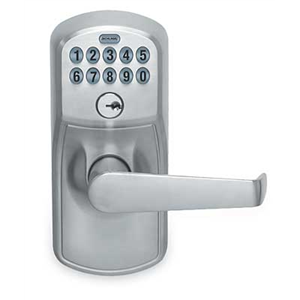
| Keypad sealing | Condensation kills exterior electronics | Gasketed or IP-rated keypad, sheltered by an overhang if possible |
| Mechanical override | Batteries fail in cold | A keyed cylinder on any exterior smart lock |
Fitted prices for these upgrades sit roughly between $160 and $480 per door depending on grade and cylinder type, plus the service call. Ranges for every service are on our Newmarket locksmith prices page, and after-hours attendance carries a premium.
Smart locks in the cold, and the battery question
Smart locks work fine in Canadian winters, with two caveats that nobody puts on the box. The first is battery chemistry. Standard alkaline AA cells lose a large share of their usable capacity below about minus 10 and recover when they warm up, which is why a keypad reads sixty percent at 9pm and refuses to turn the bolt at 6:30am. Lithium AA cells hold their voltage far more steadily down toward minus 40 and are the correct choice for any exterior smart lock in Ontario. They cost a few dollars more and last through the season.
The second is condensation. An exterior keypad has a sealed-ish enclosure with air inside it. That air warms in the afternoon sun and cools overnight, and moisture ends up on the inside of the board. Locks mounted under a porch roof or a decent overhang last years longer than locks on a fully exposed north-facing slab.
There is also a motor consideration. A smart lock throws the bolt with a small motor, and that motor has far less torque than your wrist. If the strike alignment has drifted, a person will still force the key and never notice, while the motor will stall, report a jam and drain the batteries retrying. Half the winter smart-lock failures we attend are not the lock at all — they are a strike that needs a two-millimetre adjustment.
Always keep the mechanical key override working, and keep a physical key somewhere off the property. If you are choosing hardware now, our smart lock installation page covers which types suit which doors.
The seasonal routine that prevents all of this
Late September or early October
Clean the cylinder face. Flush the keyway if it has ever been oiled, then apply dry PTFE or graphite. Grease the bolt edge and strike face with white lithium. Check the weatherstripping and the door sweep, and replace anything that no longer touches the frame.
Same visit: check the strike
Throw the bolt slowly with the door open, then with it closed. If it needs any lift, push or pull on the handle to engage, the strike is out. File or move the plate now, and replace short screws with three-inch ones into the framing while you are there.
Swap in lithium cells
Every exterior smart lock, keypad and camera. Do it once, in the autumn, and note the date inside the battery cover. Do not wait for the low-battery warning at minus 20.
Mid-winter, after the first thaw and refreeze
One short burst of PTFE into each exterior cylinder and a quick test of every door. Two minutes per door. This is the step that prevents the 6am call.
April
Wipe the salt off the hardware, re-check strike alignment as the house settles back, and look at the door gap. Anything that binds in spring will bind worse next January.

Winter lock work we handle
Winter lock calls across the area
Exposure varies more than people expect over a short distance. Doors facing open fields in East Gwillimbury, Queensville and Sharon take wind-driven snow straight into the keyway, while a sheltered porch in Central Newmarket or on Main Street South rarely freezes at all. Townhouse stock near Yonge and Davis tends to sit under an overhang and fails less often. We cover all of it from the same Newmarket base.
Frequently asked questions
Why does my door lock freeze in winter?
Moisture inside the cylinder freezes and blocks the tiny clearance between the plug and the shell. Humid indoor air escaping through the door gap condenses on the coldest metal, which is the lock face, and even a few drops is enough. Repeated freezing usually points to failed weatherstripping, a door sweep that no longer touches, or a lost gasket behind the exterior escutcheon.
Should I use WD-40 on a door lock?
No, not inside the keyway. It frees a stiff lock for about a week, then the oil film it leaves collects dust and grit into a paste that packs the pin chambers and stops the pins returning in cold weather. Use a dry PTFE spray or powdered graphite instead. White lithium grease is fine on the bolt edge, the strike and the hinges.
What is the best lubricant for outdoor locks in Canada?
A dry PTFE spray is the best all-round option: it leaves a dry film that does not thicken in cold or attract dirt. Powdered graphite is equally cold-proof and is the traditional choice, though it is messy and should not be mixed with wet products. Apply in early autumn, then once more mid-winter after the first thaw and refreeze.
Can I pour hot water on a frozen lock?
Do not. It thaws for a few seconds, then the water runs deeper into the cylinder and refreezes solid, leaving you worse off than before. Warm the key instead and let conducted heat do the work, or use an alcohol-based de-icer or windshield washer fluid, which lowers the freezing point and carries the water out.
Do smart locks work in Canadian winters?
Yes, with lithium batteries rather than alkaline. Alkaline cells lose much of their usable capacity below about minus 10, which is why a keypad reads healthy at night and fails at dawn. Lithium AA cells hold voltage far lower. Keep the mechanical key override functional, and shelter the keypad under an overhang where the door allows it.
Why will my deadbolt not lock in cold weather?
Almost always the strike, not the lock. Cold contracts the door and the frame moves with the house, so a bolt with two millimetres of clearance in September now catches the edge of the plate. Test by throwing the bolt with the door open and then closed. If it only binds when closed, the strike needs adjusting, which is a five-minute job.
What material is best for exterior door locks in cold climates?
Solid brass or 304 to 316 stainless steel. Both handle freeze-thaw cycling and the road salt that gets tracked and blown onto front doors. Plated zinc alloy, which is most inexpensive big-box hardware, corrodes under the plating and pits at the cylinder face. Satin nickel and satin chrome finishes hold up best against sun and freezing rain.
How often should I service my exterior locks?
Twice a year is enough. Clean and dry-lubricate in early autumn, check the strike alignment at the same time, and repeat a quick lubricant burst mid-winter after the first serious thaw and refreeze. Add a spring check in April to wipe off salt and re-check alignment as the house settles. Ten minutes per door, twice a year.
Related locksmith services in Newmarket
Lock frozen, binding or refusing the key?
Call 866-820-1331 before you force it and snap a blade. We thaw, flush, re-lubricate and realign, or fit hardware built for this climate. Typical Newmarket response is 20 to 30 minutes, 24 hours a day, all winter.