
Deadbolt Locks in Newmarket: Grades, Bolt Throw and Fitting
What separates a Grade 1 deadbolt from a Grade 3, why one inch of bolt throw is the number that counts, and the ten dollar strike plate upgrade that outperforms most lock purchases.

Quick answer
A deadbolt is a lock whose bolt cannot be pushed back once thrown, only turned back by key or thumbturn. For a Newmarket entry door, look for at least an ANSI Grade 2 deadbolt with a one inch throw, a single cylinder inside, and a reinforced strike plate fixed with three inch screws that reach the framing stud.
A deadbolt is a simple idea done well. A spring latch has an angled face, which is why the door closes when you push it and why a sheet of plastic can push it back open. A deadbolt has a square-ended bolt with no spring behind it. Nothing shoves it aside. It only moves when something turns the plug.
That is the whole security value of the thing, and it is why we spend more time talking about the frame than the lock on most Newmarket calls. A very good deadbolt fitted into a strike plate held by two three-quarter inch screws is a very good deadbolt attached to nothing.
Below is what actually matters when choosing and fitting deadbolt locks in Newmarket: cylinder configuration and the fire safety argument that goes with it, bolt throw, ANSI grades in practical terms, the strike plate, adding a deadbolt to a door that never had one, and the surface-mounted options that suit older doors. If you already know you want new hardware across the house, see lock replacement for brand, grade and finish choices.
Single cylinder or double cylinder, and the safety argument
This is a life safety decision before it is a security decision.
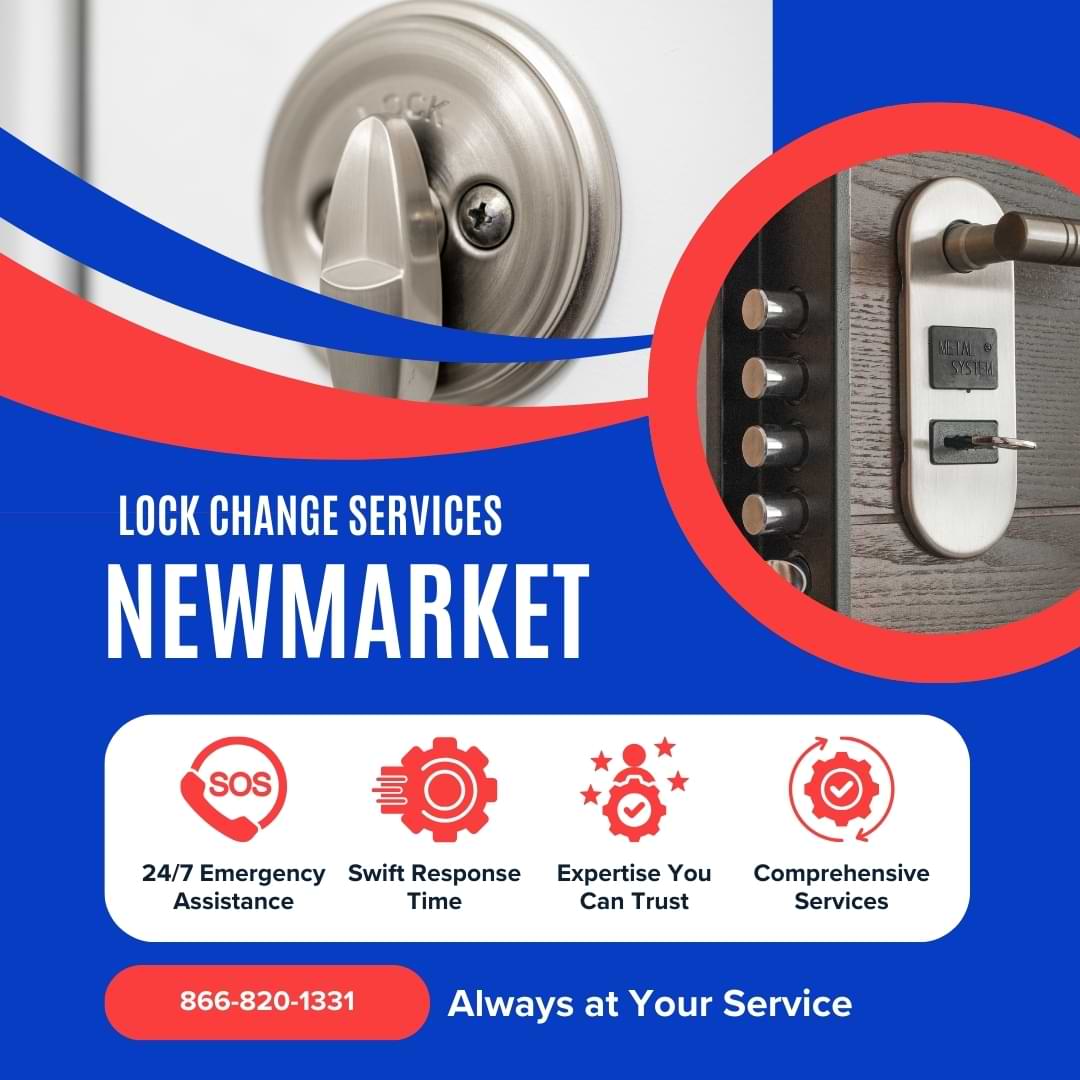
A single cylinder deadbolt has a key outside and a thumbturn inside. A double cylinder deadbolt takes a key on both sides. People fit double cylinders on doors with glass sidelights or a glazed panel, on the reasoning that breaking the glass and reaching through then achieves nothing.
Better answer for a glazed door
Fit a single cylinder deadbolt and deal with the glass instead. Security film on the sidelight, or a laminated glass panel, means the reach-through never happens.
Second choice
A single cylinder with a removable thumbturn, or a captive-key thumbturn, so it can be locked key-both-sides when the house is empty but never while anyone is asleep inside.
Where a double cylinder is defensible
A commercial back door with no glass nearby that is not a designated exit, or a storage room. Even then check the exit requirements first. On an exit route, a panic bar is the correct answer.
If you already have one
Leave the key in the inside cylinder, on the cylinder, permanently, or have us convert it. A conversion to a thumbturn is inexpensive and takes minutes.
The reasoning is sound and the consequence is serious. In a fire, in smoke, in the dark, with children in the house, a door that needs a key from the inside is a door that does not open. People die in exactly that situation. The Ontario Fire Code takes a dim view of key-operated locking on a required means of egress, and for a dwelling our position is plain: do not put a double cylinder on the door your family would run out of.
Bolt throw and ANSI grade: the two numbers to check
Bolt throw is how far the bolt projects out of the door edge when fully locked. One inch is the standard worth insisting on. The reason is arithmetic rather than opinion. A typical door has a gap of about an eighth of an inch to the jamb. A shorter bolt of half or five eighths of an inch leaves very little steel actually engaged inside the strike, and a door that flexes under a kick can let the bolt slip out of the pocket without breaking anything. A full inch keeps meaningful engagement even while the door is bowing.
| Grade | What it is tested to | Where it belongs |
|---|---|---|
| Grade 1 | Highest residential and commercial standard. 250,000 cycles, ten strikes of 75 ft-lb impact, 360 kg of bolt force. | Commercial entrances, apartment building doors, any door used dozens of times a day, and homeowners who want the best. |
| Grade 2 | Solid residential standard. 150,000 cycles, five strikes of 75 ft-lb, 250 kg of bolt force. | The sensible default for a Newmarket house. Front, back and side entry doors. |
| Grade 3 | Minimum residential. 100,000 cycles, two strikes of 75 ft-lb, 150 kg of bolt force. | Interior doors, a shed, a low-risk secondary door. Not what should be on your front entrance, though it often is on a builder-supplied house. |
ANSI and BHMA grade the whole lock, not just the bolt. The grades describe how many cycles the lock survives and how much force and how many hammer blows it takes. In plain terms:
Builder-grade hardware in a lot of the 1990s and 2000s subdivisions around Newmarket is Grade 3. Moving the front and back doors to Grade 2 with a one inch throw is a modest cost and a real improvement.
The strike plate and three inch screws: the best money on the whole door
If you only change one thing today, change this.
Here is the part almost everyone skips. The strike plate is the metal plate on the jamb that the bolt lands in. As shipped, most strike plates are thin stamped steel fixed with two screws about three quarters of an inch long. Those screws go into the jamb, which is a thin piece of trim wood nailed to the actual structure. Behind that jamb there is usually an air gap, then packing shims, then the framing stud.
Fit a box strike, not a flat plate
A box strike has a steel pocket behind the hole so the bolt is surrounded by metal instead of sitting in a hollow in the wood. Four screw holes rather than two.
Use three inch screws
Long enough to pass through the jamb, cross the shim gap and bite hard into the framing stud. That converts the attack from splitting a piece of trim into moving the wall.
Add a hinge reinforcement while you are there
The hinge side fails just as often. Replace one screw in each hinge leaf with a three inch screw into the stud. Ten minutes, negligible cost.
Check the alignment before you finish
The bolt should enter the strike cleanly and throw the full inch without being lifted or leaned on. If you have to pull the door towards you to lock it, the strike is in the wrong place and the door will be worse in winter.
So when a door is kicked, the deadbolt does not break. The jamb splits along the grain and the whole strike plate leaves with it, screws and all. Almost every forced entry we attend in Newmarket looks exactly like that, and almost every one of them would have taken a lot longer or failed outright with a proper strike.
Adding a deadbolt where there never was one, and surface-mounted options
Plenty of Newmarket doors have only a knob or lever, particularly interior garage doors, older side doors and some rear entries in the townhouse stock near Yonge and Davis. Adding a deadbolt to a bored door is straightforward but it is not a job to improvise. The bore has to be square to the face, the edge bore has to intersect it cleanly, the strike pocket has to be chiselled to depth, and the whole thing has to line up on both sides of a door that may not be perfectly plumb any more.
Jimmy-proof deadbolt
The vertical-bolt surface lock, common on older apartment and downtown doors. Interlocking rings on the jamb strike mean the door cannot be pried apart at the joint. Ugly, and genuinely effective on an outward-flexing door.
Surface-mounted rim deadbolt
Mounts on the inside face of the door and takes a rim cylinder through it. A good answer for a thin or unusual door where boring a standard hole is not safe.
Double door and French door
The inactive leaf needs flush bolts top and bottom into the header and the sill, otherwise the deadbolt is throwing into a leaf that is itself only held by a latch.
Garage and side entries
The interior door from an attached garage is a favourite entry point because it is out of sight. It deserves the same Grade 2 deadbolt and three inch strike screws as the front door.
On a hollow-core door there is a further problem. There may be nothing but cardboard honeycomb where you want to put the lock, and the block of solid timber near the existing knob may be only a few inches wide. In that case a deadbolt is not the fix, a solid door is. We will say so rather than fit a lock into cardboard.
Deadbolt prices in Newmarket
Typical 2026 supply-and-fit ranges for Newmarket and the surrounding towns. Labour only is cheaper if you have already bought the hardware, and we are happy to fit customer-supplied locks provided the grade is not obviously unfit for the door.
| Job | What it covers | Typical price |
|---|---|---|
| Grade 3 deadbolt supplied and fitted | Basic replacement on an existing bore | $110 – $170 |
| Grade 2 deadbolt supplied and fitted | One inch throw, the sensible residential default | $150 – $240 |
| Grade 1 deadbolt supplied and fitted | Commercial or heavily used entry | $220 – $380 |
| Deadbolt fitted to a door with no prep | Boring door and jamb, strike mortise, alignment | $180 – $300 plus hardware |
| Reinforced box strike with three inch screws | Strike, screws, hinge reinforcement, alignment | $45 – $90 |
| Double to single cylinder conversion | Thumbturn fitted on an escape route door | $120 – $200 |
Ranges are typical for Newmarket in 2026 and cover parts and labour on a standard door. Overnight, weekend and statutory holiday call-outs carry a premium. A firm price is confirmed on the phone before anyone is dispatched.
Why Newmarket calls us first
Deadbolt fitting across Newmarket and nearby towns
We fit deadbolts across the whole of Newmarket, from the 1980s stock in Bristol-London and Huron Heights to the newer builds off Leslie and the century houses near Main Street South, and out to the surrounding towns from the same base.
Frequently asked questions
Should I get a single or double cylinder deadbolt?
Single cylinder, on any door people would use to get out of the building. A double cylinder needs a key from the inside, and in a fire that is a trap. If the worry is glass beside the door, put security film or laminated glass on the sidelight and keep the thumbturn. Double cylinders belong on non-exit commercial doors, and even then only after checking the exit requirements.
How long should the bolt throw be?
One inch. Anything shorter leaves too little steel inside the strike once you allow for the gap between door and jamb, and a door that flexes under impact can let a short bolt slip out of the pocket. Most reputable Grade 1 and Grade 2 deadbolts throw a full inch. A lot of budget Grade 3 hardware does not.
What is the difference between ANSI Grade 1, 2 and 3?
They are durability and force ratings. Grade 1 survives 250,000 cycles and the highest impact and bolt-force tests, Grade 2 sits in the middle at 150,000 cycles, Grade 3 is the minimum residential level. For a Newmarket house Grade 2 is the sensible standard on entry doors. Grade 1 is worth it on a commercial door or one used constantly.
Are three inch strike screws really that important?
Yes, and they are the cheapest meaningful upgrade on the door. Standard three quarter inch screws only reach the jamb trim, which splits when a door is kicked. Three inch screws reach the framing stud behind it. It costs a few dollars in parts and changes the failure mode of the whole door.
Can you add a deadbolt to a door that does not have one?
Usually yes, on a solid wood or metal-skinned door. We bore the face and the edge, mortise the strike into the jamb and align it. On a hollow-core door there is often not enough solid material to hold a lock, in which case fitting one gives false confidence and we will tell you the door itself needs changing.
My deadbolt is hard to turn. Is the lock failing?
Usually not. Nine times out of ten the door has moved with the seasons and the bolt is now dragging on the strike instead of entering it cleanly. Look for a bright rub mark on the strike plate. Repositioning or filing the strike fixes it. If the key itself is stiff even with the door open, the problem is in the cylinder. See lock repair.
Should the front and back deadbolts use the same key?
It is far more convenient and it costs very little. We pin all the exterior cylinders to one key on site. Fewer keys in a pocket also means fewer keys lost, and fewer reasons to need the locks rekeyed later.
Do I need a deadbolt if I already have a smart lock?
Most smart locks are deadbolts, so you already have one. What matters is the same as with any deadbolt: the throw, the grade of the bolt assembly and the strike. A battery keypad on a weak strike is still a weak door. Fitting and cold weather behaviour are covered on our smart lock installation page.
Related locksmith services in Newmarket
Get the deadbolt and the frame done together
We fit the lock, reinforce the strike and check the alignment on the same visit, usually within 20 to 30 minutes of your call. Phone 866-820-1331 day or night.