
Key Stuck in a Lock in Newmarket: Diagnose It Before You Force It
Three completely different faults get described the same way on the phone. Which one you have decides whether this is a two-dollar fix, a door adjustment, or a dead cylinder.

Quick answer
A key stuck in a lock in Newmarket is usually one of three faults: the key will not turn, the key will not come back out, or the key turns freely without moving the bolt. The first is normally a binding latch or a dry cylinder, the second a worn key or debris in the keyway, the third a broken cam or tailpiece. Stop forcing it before the key snaps.
A key stuck in a lock in Newmarket gets called in three or four times a week through the winter, and the description on the phone is almost always identical: it is stuck. But there are three separate faults hiding behind that word, they have different causes, and two of them get dramatically worse if you keep applying force. The first useful thing you can do is work out which one you actually have.
The reason this matters is cost. A key that will not turn because the door has swollen and the bolt is dragging on the strike is a fifteen-minute alignment job. A key that will not turn because the cylinder is full of hardened grease and grit is a clean and lubricate. A key that spins loosely and does nothing is a mechanical failure inside the lock body, and no amount of lubricant is going to help it. Same symptom, three different bills.
Newmarket makes this worse than it needs to be because of the freeze-thaw cycle. A wood or steel door that fitted perfectly in October is sitting a few millimetres differently in January, and again in April. Doors on the older Main Street South houses and on the 1990s Glenway and Bristol-London builds move noticeably with the seasons, and the lock is what tells you about it.
Which of the Three Problems Do You Have?
Put the key in, apply gentle pressure, and pay attention to what actually resists.
The key goes in but will not turn
The key is fully seated and stops dead, or moves a few degrees and binds. Usually the bolt or latch is under load from a misaligned strike, or the pins are not lifting because the cylinder is dry, dirty or frozen. This is the most common of the three in Newmarket, and the most fixable.
The key turns but will not come back out
The lock works, the door opens, the key stays behind. Almost always the plug has not returned exactly to twelve o clock, or a worn key is catching on a pin chamber. Sometimes a broken spring is holding one pin down.
The key turns freely and nothing happens
It spins a full turn with no resistance and the bolt never moves. The cylinder is fine; the connection between it and the lock body is not. A snapped tailpiece, a stripped cam, a sheared set screw, or on a mortise lock a failed hub inside the case.
The key will not go in at all
Different problem again. Ice in the keyway, a bent key, debris, or somebody has jammed something in the lock. Never force a key into a keyway that resists on entry, because that is exactly how blades snap.
Test one more thing before you call, and it takes five seconds. Open the door if you can, then operate the lock with the door standing open. If the key turns perfectly with the door open and binds when it is closed, the lock is fine and the door is the problem. That single test saves people a cylinder replacement they did not need.
Why Locks Seize Up in Newmarket
The causes are boringly consistent, and most of them are seasonal.
Seasonal door movement. This is the big one. Between a minus twenty-five January morning and a humid thirty-degree July afternoon, a door slab and its frame move enough that the deadbolt no longer enters the strike plate cleanly. The bolt drags on the lip of the strike, the key feels stiff, and by February you are leaning on it hard. Houses that settle, older frames, and doors with heavy weatherstripping all show it first. The fix is not a new lock. It is lifting the door on its hinges, shimming a hinge, or filing and repositioning the strike.
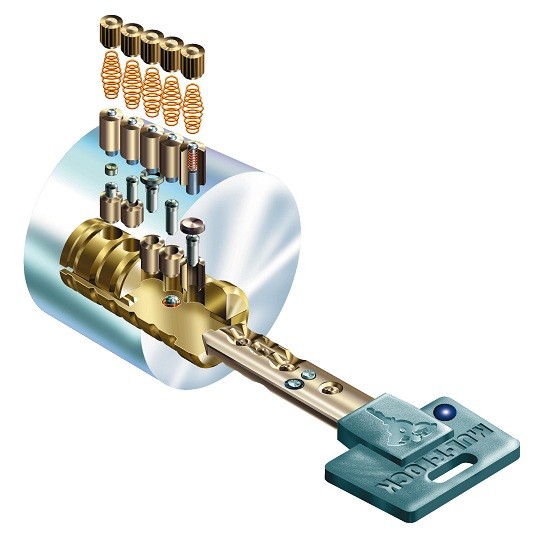
A dry or dirty cylinder. Pins ride on springs in narrow brass chambers. Dust, grit off a keyring, and the residue left behind by household oils build up over ten or fifteen years and the pins stop returning cleanly. A cylinder that has never been serviced since the house was built in 1998 is overdue.
A worn key. The cuts on a daily key wear down measurably over years, especially on soft brass duplicates. Eventually one cut sits low enough that a pin no longer clears the shear line. The giveaway is that the spare from the drawer works perfectly and your everyday key does not.
A frozen lock. Moisture gets into the keyway from rain and blowing snow, then the temperature drops. The water freezes around the pins and the plug will not move. This is common on garage side doors, shed padlocks, and any exterior door on the north or west face catching wind off the fields north of Green Lane.
A cylinder at the end of its life. Springs weaken, plugs wear oval, and cheap builder-grade hardware from a 2003 subdivision has simply done its time. If a lock has become progressively worse over a year, it is failing rather than sticking, and replacing the lock is the honest answer.
What You Can Safely Try Yourself
Everything here is reversible. The moment something needs force, stop.
Lift the door while you turn the key
Grab the handle and pull up and slightly toward the hinges, taking the weight of the slab off the bottom hinge, then try the key. If it suddenly turns, the diagnosis is done: the door has dropped and the bolt is binding in the strike. That is an alignment fix, not a lock fix.
Use dry graphite or a PTFE lock lubricant
A puff of powdered graphite or a shot of a PTFE-based lock spray into the keyway, then work the key in and out a dozen times. Do not use WD-40 or cooking oil. WD-40 is a solvent that strips what lubricant is left and then attracts dust, which is why locks treated with it feel great for a week and worse than before after a month.
Thaw a frozen lock gently
Warm the key with your hands or a lighter for a few seconds and slide it in slowly, repeating until it seats. A hair dryer on an extension cord works well. Do not pour hot water on the lock, because it refreezes deeper inside within minutes and the second freeze is worse than the first.
Try the spare key
If the spare works and your everyday key does not, the key is worn out. A fresh key cut from the original or decoded from the cylinder costs a few dollars and solves it. This is the cheapest outcome available and it is worth checking before anyone drives out.
Where to stop, without exception: do not turn the key with pliers, do not put a screwdriver or a bar through the bow for leverage, and do not keep torquing a key that has already flexed visibly. A brass blade under leverage snaps inside the plug, and then you are paying for broken key extraction on top of the original problem. Do not drive screws deeper into a lock that is loose, either; a rattling cylinder usually means the through-bolts are pulling the halves out of alignment and cranking them tighter jams the plug harder.
What the Technician Does On Arrival
The visit starts with the same test you did: the lock is operated with the door open and then closed, to separate a lock fault from a door fault. From there it goes one of a few ways.
- Door and strike alignment. The hinges are checked for sag, a longer screw goes into the top hinge to draw the slab back toward the frame, and the strike plate is filed or repositioned so the bolt enters clean. Fifteen to thirty minutes and the lock is never touched.
- Cylinder service. The plug is flushed of grit and old grease, inspected for weak springs and worn pins, re-lubricated with a dry film product and cycled until it runs smoothly.
- Key replacement. The cylinder is decoded and a fresh key cut to the original factory depths rather than copied from your worn one.
- Tailpiece or cam repair. Where the key spins uselessly, the lock comes off the door and the drive connection is inspected. On many deadbolts the tailpiece is a replaceable part; on a mortise case it may be the internal hub, which is covered under mortise lock repair.
- Cylinder or full lock replacement, where the hardware is worn past service and a repair would only buy a few months.


If the door itself has dropped badly, or the frame has moved with the ground, the honest recommendation is sometimes carpentry rather than hardware. You will be told that rather than sold a lock that will bind again by next winter.
What It Costs to Free a Stuck Key in Newmarket
Typical 2026 ranges around Newmarket. Most stuck-key calls land in the first two or three rows.
| Job | Typical range | What it includes |
|---|---|---|
| Diagnose and free a stuck key, daytime | $85 – $150 | Assessment, cylinder service and testing |
| After-hours or overnight call-out | $135 – $230 | Evenings, overnight, weekends and statutory holidays |
| Frozen lock thawed and re-lubricated | $80 – $140 | Thaw, flush, dry-film lubricant and a moisture-resistant cap where fitted |
| Door and strike alignment | $110 – $220 | Hinge adjustment, strike repositioning, latch clearance corrected |
| Cylinder clean, service and re-pin | $95 – $180 | Full strip, clean, worn pins and springs replaced |
| New key cut to code from the cylinder | $25 – $50 | Accurate factory-depth key rather than a copy of a worn one |
| Cylinder replacement, keyed to your existing key | $150 – $290 | Grade 2 cylinder, so you keep carrying the same key |
| Full deadbolt replacement | $170 – $320 | Grade 2 deadbolt supplied, fitted and keyed on site |
Plenty of these calls end with the cheapest line on the table. If a two-dollar key and a puff of graphite fixes it, that is what you will be told and that is what you will be charged for. A full price list for every service is on the Newmarket locksmith prices page.
Ranges are typical for Newmarket and the surrounding towns and are not a quote. Overnight, weekend and statutory holiday call-outs carry a premium. A firm total is confirmed on the phone before a technician is dispatched.
Why Newmarket calls us first
Stuck Locks Across the Region
Freeze-thaw does not stop at the town line. The same seasonal binding shows up on exposed doors in Holland Landing, Sharon and Queensville, and on lakeside properties around Keswick where wind-driven moisture gets into keyways.
Frequently asked questions
My key will not turn in the front door. What should I try first?
Lift the door by the handle, pulling up and toward the hinges, and try the key again. If it turns, the slab has dropped and the bolt is dragging in the strike. If it still will not turn, try the spare key. If the spare works, your everyday key is worn out. If neither works, stop applying force and call, because the next stage is usually a snapped key.
Is WD-40 bad for locks?
Yes, as a lubricant. It is a water-displacing solvent, so it thins and washes out the grease already in the cylinder, then leaves a tacky residue that collects dust around the pins. Locks feel better for a few days and noticeably worse a month later. Use powdered graphite or a PTFE-based lock spray instead.
Why does my lock only stick in winter?
Because the door and frame move. Wood and steel expand and contract through the Newmarket freeze-thaw cycle, and a bolt that entered the strike cleanly in September starts catching on the lip in January. Cold also thickens whatever lubricant is inside the cylinder. The permanent fix is realigning the door and strike, not replacing the lock.
The key turns but the deadbolt does not move. What broke?
The cylinder is doing its job and the connection to the lock body has failed. On a standard deadbolt that is usually a sheared tailpiece or a stripped cam; on a mortise lock it can be the internal hub or a broken follower. It needs the lock off the door to diagnose. Do not keep spinning it, because the bolt may be left thrown.
How do I get a key out that will not come back out?
Push the key gently forward into the lock while turning it a few degrees back toward the upright position, then withdraw slowly and straight. Most stuck keys are held because the plug is not quite at twelve o clock. If it does not release with light pressure, leave it. Yanking it is how the blade snaps off inside the plug.
Can you fix a frozen lock, or do I need a new one?
Almost always fix. The lock is thawed, the water flushed out, and a dry-film lubricant put in so moisture has less to cling to. A new lock is only warranted if the freezing has corroded the internals or the cylinder was already failing. Pouring hot water on it yourself is the one thing to avoid, because it refreezes deeper.
How much does it cost to fix a key that sticks?
A daytime diagnosis and cylinder service is typically $85 to $150. A door and strike alignment runs $110 to $220. If it turns out to be a worn key, a new one cut to code from the cylinder is $25 to $50. Overnight and holiday call-outs sit in the $135 to $230 range for the same work.
My key snapped while I was forcing it. Now what?
Leave the fragment where it is and do not reach for glue or pliers. The piece is normally hooked out with a purpose-made extractor in a few minutes and the cylinder survives, provided nobody has already made it worse. Details and pricing are on the broken key extraction page.
Related locksmith services in Newmarket
Before the Key Snaps, Put It Down
Describe what the lock is doing and you will usually get a diagnosis over the phone. Call 866-820-1331 any hour, any day. Most Newmarket addresses are reached in 20 to 30 minutes.