
Lock and Key Problems in Newmarket, Season by Season
Doors in this part of York Region move about 5 mm through the year. Here is what that does to your locks in January, April, July and October, and what to do about it before it strands you outside.
Quick answer
Lock failures in Newmarket follow the weather. Cold seizes cylinders and kills smart-lock batteries in January and February. The spring thaw swells doors so latches miss their strikes. Summer heat expands aluminum storefront doors. Autumn brings the second movement window and pre-winter maintenance. Most of it is predictable and cheap to prevent.
A locksmith’s calendar in Newmarket is not evenly spread. The phone rings for different reasons in February than it does in July, and after twenty-five years working doors between Yonge Street and Leslie Street the pattern is close to a metronome. Cold weather breaks locks one way. Humidity breaks them another. Moving season breaks nothing at all but generates a week of lock changes anyway.
Most of what goes wrong is not the lock failing on its own. It is the building moving around the lock. A wood door in a Glenway Estates split-level is a hygroscopic slab hanging off three hinges. It takes on moisture in April and gives it back in September, and the latch bolt that slid cleanly into its strike in March now catches on the lip. Ninety percent of what people describe as a broken lock is really a door and frame that no longer agree with each other.
This guide walks the year in order. Read the season you are in, or read the one coming, because the cheapest lock call is the one you make in October instead of the one you make at minus 22 in January. Anything urgent, the 24 hour locksmith line is answered around the clock at 866-820-1331.
January and February: cold, batteries and seized cylinders
The deep-cold stretch is the busiest and least forgiving period of the year.
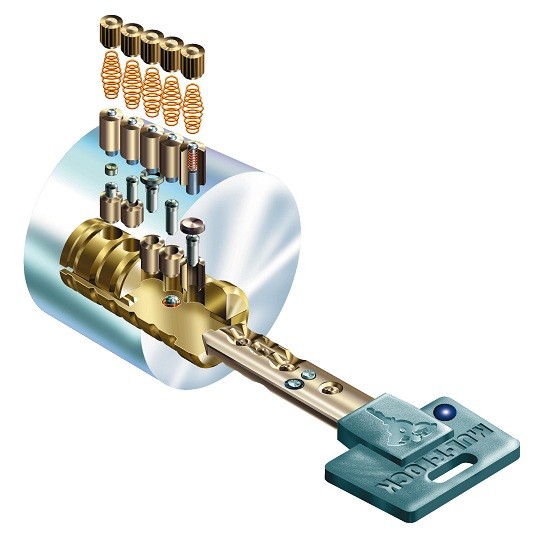
A pin tumbler cylinder has roughly a tenth of a millimetre of working clearance around the plug. Fill that gap with condensation, drop the temperature to minus 18 overnight, and the plug is locked in ice. The key goes in, the key will not turn, and the natural response is to force it. Brass keys shear at surprisingly low torque when they are cold. A snapped key inside a frozen cylinder at 6:40 on a January morning is one of the most common calls we take all year.
Do not pour boiling water on it. The water refreezes deeper in the mechanism and in a wood door it soaks the frame. Do not use a lighter on the key either, because most residential cylinders sit in a housing with plastic components and the heat travels. The correct fix is a dry graphite or PTFE lubricant applied in the autumn so there is no moisture in there to begin with, and a de-icer with isopropyl alcohol as the emergency measure.
Dead smart lock batteries
Alkaline AA cells lose a large share of their usable capacity below minus 10. A keypad that read 40 percent in December can be flat by the second cold snap. Lithium AAs hold up far better in Ontario winters.
Seized outbuilding padlocks
Shed, garage and trailer padlocks sit unheated and unused for months. Water gets into the shackle spring, freezes, and the lock will not release even with the correct key. Weather-shielded shackle padlocks solve it permanently.
Frost on the strike plate
Steel entry doors on unheated garages build frost on the strike. The bolt throws, then cannot retract. A properly adjusted door with an intact sweep does not do this.
Snapped keys
A worn key is thinnest at the shoulder. Cold plus force finishes it off. If your key has to be jiggled, it is already telling you it is worn.
If a key does break off in the cylinder, stop. Do not push the remaining fragment in further and do not try a superglue trick with a matchstick, which glues the pin stack in place and turns a fifteen minute extraction into a cylinder replacement. Fragment extraction is quick with the right spiral extractor, and in most cases the cylinder survives and only the key needs recutting. Where the cylinder is already worn out, lock repair or a straight cylinder swap is the honest answer.
March to May: the thaw moves every exterior door you own
Newmarket goes from frozen to saturated in about three weeks. Relative humidity indoors climbs, the ground under the front step heaves and settles, and wood doors take on moisture across their width. A 36 inch door slab can gain a couple of millimetres. That does not sound like much until you understand that a standard latch bolt only engages about 12 mm into the strike, and the deadbolt needs 25 mm of clear hole behind it.
The symptom is always the same and people always describe it the same way. The door has to be pulled toward you, or leaned on with a shoulder, before the key will turn. That is not a lock problem. That is the deadbolt tip fighting the edge of its hole because the door has dropped or swelled. Turning the key harder to overcome it is how cylinders get destroyed.
Check the gap before you touch the lock
Close the door and look at the reveal down the latch side. It should be even, about 3 mm top to bottom. If it is tight at the top and wide at the bottom, the door has sagged on its hinges and the fix starts there.
Tighten or shim the top hinge
Replace two of the top hinge screws with 75 mm screws that reach the stud behind the jamb. On a sagged door this alone often lifts the slab enough that the bolt lines up again. It costs nothing but a pair of screws.
Only then adjust the strike
If the door is hanging correctly and the bolt still catches, the strike plate gets moved or filed and the mortise behind it deepened. Done properly the bolt should throw with one finger.
Replace what is actually worn
If the cylinder has been forced all winter, the pins and springs are tired. That is the point at which replacing the lock makes more sense than another adjustment.
Spring is also cottage season. Plenty of Newmarket households open a property in Georgina, Sutton or up past Keswick that has been shut since October. Locks that sat through a winter in an unheated building need the same treatment as a shed padlock, and if the key was left with a contractor or a neighbour over the winter, that is a sensible moment for a rekey rather than a full hardware change.
June to August: heat, storefronts and moving season
Summer is quieter for residential emergencies and much busier for two other things: commercial door hardware and lock changes at closing.
Aluminum storefront doors along Davis Drive, Mulock Drive and Main Street South are the summer casualty. Aluminum expands roughly twice as much as steel for the same temperature change. A glass entrance door sitting in full afternoon sun can gain a millimetre or more across its height, which is enough that the pivot binds, the hook bolt of a mortise lock no longer clears the keeper, or the closer starts slamming because the sweep speed valve is now fighting a tighter door. Businesses tend to live with it until the door will not lock at close of day on a Friday.
The other summer pattern is human, not thermal. Real estate closings cluster in June, July and August, and a new owner in a Woodland Hill townhouse or a fresh East Gwillimbury build inherits an unknown number of keys held by builders, trades, agents and previous occupants. That is the single clearest case there is for changing the locks on closing day.
- Storefront mortise hook bolts that stop engaging in afternoon heat
- Door closers slamming or failing to latch as the fluid thins in the heat
- Panic bar dogging mechanisms left engaged through a hot day and not resetting
- Screen and patio door locks that were never adjusted after installation
- Garage side-entry doors swollen shut after a humid week
- Closing-day lock changes and rekeys on resale and new-build homes
- Rental turnover between tenants, usually the last week of the month
September to November: the second movement window, and the one month that matters
Autumn is the mirror of spring. Doors give up the moisture they took on and shrink slightly, gaps open, and the complaint flips from a door that will not close to a door that rattles and lets a draft through. A door that rattles is a door where the latch is no longer fully engaged, and a latch that is not fully engaged is trivially easy to slip with a card. It is a security issue dressed up as a comfort issue.
October is the month to do the boring work. Once the first hard frost arrives the options shrink and the prices go up, because everything becomes urgent. Fifteen minutes per door in October reliably prevents the February call.
- Blow out and dry-lubricate every exterior cylinder with graphite or PTFE, never oil, which collects grit and then freezes
- Replace smart lock batteries with lithium AAs, and write the date inside the battery cover
- Check that every deadbolt throws its full 25 mm without lifting or pulling the door
- Confirm the strike plate is held by 75 mm screws into the stud, not the 19 mm screws that come in the box
- Check the door sweep and weatherstrip, because water reaching the latch is what freezes in January
- Test the garage side door and shed padlocks now, while they still open
- Cut a fresh spare key from the least worn key you own, not from a copy of a copy
- Walk the exterior after dark and note which entry doors are unlit
That last point is worth more than it sounds. Sunset in Newmarket falls before 5 p.m. from early November, and a large share of forced-entry attempts in residential areas happen at side and rear doors that nobody can see. A motion light and a properly fitted Grade 1 deadbolt do more for a house than any upgrade at the front door, which is the one door that is already lit and already watched.
What seasonal lock work costs in Newmarket
These are realistic 2026 ranges for the work described above. Every price is confirmed on the phone before a technician is dispatched, so there is no discovering the number at the door.
| Job | Typical on-site time | Typical price (CAD) |
|---|---|---|
| Frozen cylinder thawed, dried and lubricated | 15 – 30 min | $95 – $160 |
| Broken key extraction, cylinder reused | 20 – 40 min | $110 – $190 |
| Deadbolt and strike realignment after door movement | 30 – 60 min | $120 – $200 |
| Exterior door lock replaced, per door, hardware extra | 30 – 45 min | $150 – $280 |
| Smart lock dead-battery entry and battery service | 20 – 40 min | $120 – $220 |
| Autumn maintenance visit, up to six exterior cylinders | 45 – 75 min | $140 – $230 |
| Aluminum storefront cylinder or closer adjustment | 45 – 90 min | $180 – $350 |
| Full house rekey, four to six cylinders, keyed alike | 45 – 75 min | $150 – $270 |
If a technician arrives, finds the problem is a $4 pair of long screws and a strike adjustment, that is what you get told. Nobody sells a homeowner a new lock to fix a hinge.
Ranges are typical for a Newmarket address and cover labour plus a standard cylinder where one is included. Overnight, weekend and statutory holiday call-outs carry a premium. High-security and restricted-keyway hardware costs more. A firm price is confirmed by phone before dispatch.
What the work looks like on the door

Why call us for seasonal lock work
Where we cover
Our technicians work out of Newmarket and cover the surrounding towns on the same call-out. Winter response times stretch a little on the far edges of the area when Highway 404 and Highway 400 are slow, and we will tell you honestly on the phone what to expect rather than quote you an optimistic number.
Frequently asked questions
My key will not turn in the cold. Is the lock broken?
Usually not. In a hard freeze the most likely cause is moisture inside the cylinder that has turned to ice, and the second most likely cause is a door that has shifted so the bolt is binding in its hole. Both feel identical from the outside. Warm the key gently or use an alcohol-based de-icer, and never force the key, because a cold brass key snaps at less torque than you would expect.
How cold does it have to be before a smart lock stops working?
Standard alkaline AA cells start losing usable capacity around minus 10 and can drop sharply by minus 20. A lock that showed a healthy battery level in early December can be dead on the first real cold snap. Lithium AA cells perform far better in Ontario winters and are worth the extra few dollars. Every keypad lock we install also gets a mechanical key override kept somewhere other than inside the house.
Why does my door only stick in April and again in September?
Because that is when the moisture content of the door slab and the frame changes fastest. Wood takes on moisture through the spring and gives it back in the autumn, and the door swells and shrinks by a couple of millimetres across its width. The latch has only about 12 mm of engagement to play with, so a small movement is enough to make it catch. The fix is hinge and strike adjustment, not a new lock.
Should I use WD-40 on a frozen lock?
No. It is a water displacer, not a lubricant, and it leaves a residue that attracts dust and grit and then gums up in the cold. Use a dry graphite powder or a PTFE-based lock lubricant, applied before the cold arrives. If a cylinder has already been dosed with oil, it needs to be flushed and dried before dry lubricant will do any good.
When is the best time of year to change my locks?
Any month you have a reason to, but October is the easiest. Doors are dimensionally settled, the weather still lets a technician work comfortably at an open doorway, and you are not paying an emergency premium. If you have just closed on a house, changed tenants, or lost a key, do not wait for a convenient season. See our page on whether to rekey or replace before you decide which one you need.
Do you come out at night in the middle of winter?
Yes. We run 24 hours a day, 365 days a year, including nights, weekends and statutory holidays. Typical response to a Newmarket address is 20 to 30 minutes, though a heavy snowfall can add to that. Overnight and holiday call-outs carry a premium and the price is confirmed on the phone before anyone is dispatched.
My shed padlock is frozen solid. Can it be saved?
Often yes. A padlock that has iced up rather than corroded can be thawed, dried, flushed and lubricated and go back into service. A padlock that has been sitting through several winters full of water is usually rusted internally and is cheaper to replace with a weather-shielded shackle model than to keep resurrecting.
Is there anything I can do myself before calling?
Yes, and we would rather you tried. Check the gap down the latch side of the door for evenness. Try the deadbolt with the door open. If the bolt throws smoothly with the door open but fights when the door is closed, the lock is fine and the door has moved. Tighten the hinge screws first. If that does not settle it, call and we will bring it back into line.
Related locksmith services in Newmarket
Get it sorted before the season turns
Whether it is a cylinder that has iced up at 6 a.m. or a door that has been sticking since April, we can usually tell you on the phone whether it is a fifteen minute adjustment or a hardware job. Call 866-820-1331, any hour, any day of the year.