
Broken Key Extraction in Newmarket: Snapped Keys Removed On Site
Half the key is in your hand and half is in the door. In most cases the fragment comes out in a few minutes, the lock survives, and a fresh key is cut on the spot.
Quick answer
Broken key extraction in Newmarket means pulling the snapped fragment out of the keyway with a spiral or hook extractor, testing the cylinder, and cutting a replacement key on site. It usually takes under fifteen minutes and typically costs $85 to $160 during the day. The cylinder normally survives, provided nobody has already attacked it with pliers or glue.
Keys snap at the shoulder or across a deep cut, almost always at the worst moment: arms full of groceries, minus fourteen, back door off the driveway. Broken key extraction in Newmarket is one of those jobs that looks catastrophic and usually is not. The fragment is brass, the keyway is a straight channel, and there are purpose-made tools that hook a cut and draw it back out. The lock itself is often completely fine afterwards.
What turns a fifteen-minute job into a lock replacement is what happens in the twenty minutes before the call. Pliers, tweezers, superglue and a jigsaw blade have destroyed more cylinders in this town than the original break ever did. If the fragment is still in there and nobody has touched it, you are in good shape.
Extraction is available 24 hours a day across Newmarket, Aurora, East Gwillimbury and the surrounding towns, with a typical arrival of 20 to 30 minutes to a Newmarket address. Door locks, padlocks, mailbox locks, filing cabinets and car ignitions are all handled, though each behaves differently once the key is in pieces.
Why Keys Snap in the First Place
A key almost never fails without warning. Something was wrong for weeks before the break.
House keys are cut from brass or nickel silver, both soft alloys chosen because they are easy to cut and gentle on the pins inside the lock. Soft also means they work-harden. Every turn flexes the blade slightly, and after a few thousand cycles microscopic cracks form at the shoulder, which is the step where the blade meets the bow. That is why the majority of snapped keys break right there rather than at the tip.
Metal fatigue
An eight-year-old daily key on a heavy fob has flexed tens of thousands of times. Hanging a loaded keyring off the blade while it sits in the lock accelerates it badly.
A worn cylinder
When pins and springs wear, the key has to be lifted, jiggled or forced to align. Every one of those extra newtons goes straight into the blade instead of into rotation.
Cold weather
Below about minus ten, thick grease inside the cylinder stiffens and any moisture in the keyway can freeze. The lock gets harder, hands are cold, and people push. Newmarket sees a run of these calls every January.
A copy of a copy
Duplicates cut from duplicates drift a few thousandths off with each generation. By the third copy the cuts sit slightly wrong, the key binds, and you end up torquing a blade that was never quite right.
The other big one is using the key as a handle. Pulling a stiff storm door closed by the key sticking out of it, or levering a swollen door shut, puts a bending load on a blade designed only for twisting. That snaps keys clean off inside the plug.
If your key has been getting harder to turn for a while, the cylinder is telling you something. A cleaning and a proper lubricant, or a lock repair visit, is far cheaper than an extraction plus a replacement cylinder.
Why the DIY Attempt Costs You More
Every locksmith in York Region has the same story: a fifteen-minute extraction turned into a $250 cylinder replacement because of what came out of the junk drawer first. Here is what each fix actually does inside the lock.
- Superglue on a toothpick or a matchstick. The glue wicks down the keyway and past the plug, bonding the fragment to the plug walls and gluing the pin stacks solid across the shear line. Once that happens the cylinder is finished, not just the key. This is the single most expensive thing you can do.
- Needle-nose pliers or tweezers. Unless a piece of the blade is proud of the face, there is nothing to grip. What usually happens is the fragment gets pushed deeper, wedged past the first pin chamber, and the plug face is scored where the jaws slipped.
- WD-40 or penetrating oil. It is a water-displacing solvent, not a lock lubricant. It washes out whatever grease was in there, then leaves a sticky residue that collects dust and gums the pins. Dry graphite or a PTFE-based lock lubricant is what belongs in a cylinder.
- A jigsaw or coping saw blade. It works for professionals because they know which way the teeth face and how the keyway is shaped. Pushed in blind, the teeth catch on the pins, the blade snaps, and now there are two pieces of metal in the lock.
- A drill. A hand drill without a proper bit and no idea where the shear line sits will chew the plug without opening anything, and it removes the option of saving the cylinder.
The one useful thing you can do before the van arrives: if the fragment is visibly sticking out past the face of the lock, and it moves when you touch it, a careful straight pull with fine pliers is reasonable. Straight out, no wiggling, no twisting. If it does not move on the first try, stop. Everything else can wait fifteen minutes.
How the Extraction Is Actually Done
The whole job comes down to getting the plug back to its rest position and then hooking one of the cuts.
Return the plug to twelve o clock
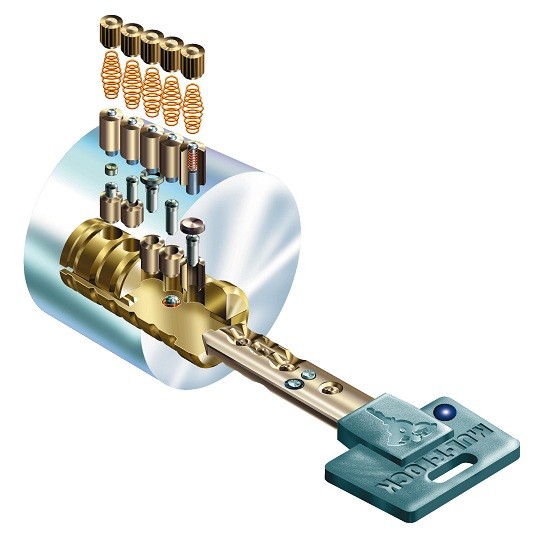
A fragment cannot come out while the plug is rotated, because the pin chambers are no longer lined up and the pins are pressing across the blade. A tension wrench or a thin pick rotates the plug back to its neutral position first. Skipping this is why home attempts fail.
Slide an extractor down beside the blade
Broken key extractors are thin spring-steel probes with a barbed hook, a double hook, or a fine spiral. The tool goes into the keyway alongside the fragment, along the bottom of the channel where there is clearance, past one of the deeper cuts.
Engage a cut and pull straight
The hook is rotated a quarter turn to bite into a valley in the blade, then drawn straight out with steady pressure. On a stubborn fragment two extractors are used at once, one on each side, so the pull is balanced and the piece does not cant sideways and jam.
Test, clean and re-key
The cylinder gets flushed of brass filings, lubricated with a dry film product, and cycled with a proper key ten or fifteen times. A replacement key is cut on site, either from the recovered pieces or by decoding the cylinder.
When a fragment is buried and will not shift, the next step is not a drill. The cylinder comes out of the door, which on a standard deadbolt means one screw on the set collar or two through-bolts, and the fragment is pushed out from the back of the keyway with a follower and a punch. That takes longer but keeps the lock alive.
When the Cylinder Has to Be Replaced Too
Most extractions end with the same lock still on the door. A minority do not, and there are only a few real reasons for it.
- The plug face is scored or the keyway mouth is deformed from a prior attempt with pliers, a screwdriver or a drill.
- Adhesive has reached the pin chambers. Glue in a lock is not reversible in the field.
- The fragment sheared inside a wafer lock or a cheap cam lock where the tolerances leave no room for an extractor to pass.
- The cylinder was already failing. If a pin spring is broken or the plug is worn oval, the extraction just brought forward a replacement that was coming anyway.
- The other half of the key is missing outdoors. If you lost the bow half in a parking lot with a fob attached to it, extraction alone does not solve the security problem, and the cylinder should be rekeyed or swapped. That decision is walked through on the rekey versus replace page.
Where a replacement is needed, a grade 2 cylinder goes on the same visit and it can usually be keyed to match the rest of your doors, so you are not carrying an extra key around. If the door has several locks, that is a good moment to have the whole house put on one key.
Door Locks, Ignitions and Padlocks Are Different Jobs
A snapped key in a front door and a snapped key in a car ignition are not the same call, and neither is a padlock frozen to a shed hasp in Sharon.
Door locks. The easiest of the three. A deadbolt or knob cylinder is accessible from both sides, can be removed from the door in a couple of minutes, and there is room to work. Expect the whole visit to take fifteen to twenty-five minutes including cutting a new key.
Ignitions. Tighter, deeper, and mounted in a steering column where you are working upside down with limited access. The wafers in an ignition are spring-loaded against the blade with more force than a house pin, so the fragment sits harder in the channel. It is doable roadside, but it takes longer, and if the original key had a transponder chip in the bow you also need a replacement key programmed. That is quoted separately as car key replacement.
Padlocks. Sometimes the honest answer is that the padlock is not worth saving. A twenty-dollar hardware store padlock with a broken key in it costs more to extract than to replace. On a good shrouded padlock protecting a compound gate or a trailer, extraction is worth doing properly.
Broken Key Extraction Prices in Newmarket
Realistic 2026 ranges for Newmarket and the surrounding area. The variables are the lock type, the time of day, and whether anyone has already had a go at it.
| Job | Typical range | What it includes |
|---|---|---|
| Door lock extraction, daytime | $85 – $160 | Fragment removed, cylinder cleaned, lubricated and tested |
| After-hours or overnight extraction | $140 – $240 | Evenings, overnight, weekends and statutory holidays |
| Extraction plus a new key cut on site | $110 – $200 | Where the recovered key is unusable or the other half is lost |
| Extraction with a rekey of the cylinder | $120 – $230 | Recommended if the missing half was lost outside the home |
| Cylinder replacement after a damaged plug | $150 – $290 | New grade 2 cylinder, keyed to your existing key where possible |
| Padlock extraction or cut and replace | $70 – $150 | Extraction where the padlock is worth saving, otherwise cut off |
| Car ignition broken key extraction | $140 – $280 | Roadside extraction only; a chipped replacement key is quoted separately |
| Mailbox, cabinet or cam lock extraction | $75 – $145 | Small wafer locks, replacement cam lock extra if the plug is damaged |
Two things reduce the bill. Do not attempt it yourself with glue or pliers, and mention on the phone what kind of lock it is, so the right extractor set and the right key blanks are in the van when it pulls up.
Ranges are typical for Newmarket and neighbouring towns and are not a quote. Overnight, weekend and statutory holiday call-outs carry a premium. A firm total is confirmed on the phone before dispatch and does not change once the technician arrives.
Why Newmarket calls us first
Where the Extraction Van Goes
Broken key calls are covered across York Region and into south Simcoe. Drive times lengthen north of Green Lane and east toward Lake Simcoe, but the same tools and the same pricing structure apply.
Frequently asked questions
Can a broken key be removed without damaging the lock?
In most cases yes. Purpose-made extractors slide into the keyway beside the fragment, hook one of the cuts and draw it out, leaving the cylinder intact. The lock is then flushed, lubricated and tested. The cases where the cylinder does not survive are almost always ones where glue, pliers or a drill got there first.
How much does broken key extraction cost in Newmarket?
A daytime door lock extraction typically runs $85 to $160, including cleaning and testing the cylinder. Overnight and holiday calls run $140 to $240. Cutting a replacement key on site adds roughly $25 to $45. If the cylinder has to be replaced because the plug is damaged, expect $150 to $290 for the new hardware fitted and keyed.
Should I try superglue to pull the key out?
No. It is the most expensive mistake in this whole category. The glue runs past the plug into the pin chambers and sets the pins across the shear line, which turns a fifteen-minute extraction into a cylinder replacement. There is no field method for reversing glue inside a lock.
Why did my key snap with no warning?
There usually was warning, just quiet warning. Brass work-hardens with every turn, and cracks form at the shoulder over thousands of cycles. A cylinder that had become stiff, a key you had to jiggle, cold weather thickening the grease, or a key cut from another copy all raise the force needed to turn and bring the break forward.
Can you get a broken key out of a car ignition?
Yes, roadside. Ignition extractions take longer than door locks because access is awkward and the wafers press harder against the blade. Budget $140 to $280 for the extraction itself. If your key had a transponder chip, a replacement key also needs cutting and programming, which is priced separately.
Do I need a new key made if half of it survived?
Not always. If the bow half is intact and the fragment comes out whole, the two pieces can be used as a pattern to cut a clean duplicate. If the break went through a cut or the pieces are chewed, the cylinder is decoded instead and a key is cut to code, which is more accurate anyway.
My key broke in the door and I am locked out. Is that one call or two?
One call. The extraction and the entry are done on the same visit, and you are quoted for both up front. If you cannot wait outside, say so on the phone. Details on the entry side are on the house lockout page.
Will the lock be safe to keep using afterwards?
If the cylinder came through the extraction clean and it cycles smoothly with a freshly cut key, yes. The technician will tell you honestly if the plug is worn or a spring is weak, because a cylinder that snapped one key will happily snap the next one. Replacing a tired grade 2 cylinder is inexpensive compared with a second call-out.
Related locksmith services in Newmarket
Key Snapped? Leave It Where It Is
Do not glue it, do not grip it. Call 866-820-1331 with the lock type and the address, get a firm price on the phone, and have the fragment out and a new key cut in one visit. Available 24 hours across Newmarket.