
Ignition Repair in Newmarket — When the Key Will Not Turn
Worn wafers, a jammed steering lock or a snapped blade. We diagnose the ignition at your vehicle and, wherever possible, rebuild the cylinder to the key you already carry.
Quick answer
Ignition repair in Newmarket usually means rebuilding a worn cylinder rather than replacing it. A mobile locksmith diagnoses whether the fault is the key, the cylinder, the steering lock or the electrical switch, then rebuilds or replaces on site. Typical cost is $180 to $320 for a rebuild and $60 to $120 for a jammed steering lock released with no parts.
An ignition that has stopped cooperating is a fault people put up with for months. It starts as a key you have to wiggle. Then it only works if you hold the wheel a certain way. Then one morning in a Ray Twinney Complex parking lot it does not work at all. Ignition repair in Newmarket is mostly this story, caught at various stages.
The good news is that the expensive-sounding version of this job is usually unnecessary. Most failing ignitions are mechanically worn cylinders, and a worn cylinder can generally be stripped down and rebuilt to the key already on your ring. You keep your keys, you keep your spares, and you pay less than a replacement.
What follows is how to read the symptom yourself, why a heavy keyring is a genuine cause and not a myth, and how to tell a cylinder problem from a switch problem before you spend anything. If the key itself is lost rather than stuck, start at car key replacement instead.
What the symptom is telling you
Four distinct failures, four different repairs. Getting this right saves real money.
The key will not turn at all
Most often the steering lock is bound against the wheel, or the automatic shifter is not fully home in Park. Beyond that it is worn wafers inside the cylinder, or a worn key that no longer lifts them to the right heights. Debris in the keyway is a distant fourth.
The key turns partway and stops
It reaches accessory or on and refuses to go to start. That is either a wafer or sidebar not clearing, a failing electrical switch behind the cylinder, or on some vehicles an interlock that wants the brake pedal or the clutch pressed.
The key spins freely all the way round
The cylinder is turning but nothing is connected to it. The cam or tailpiece at the back has sheared, or a retaining clip has let go. The car is dead and no amount of turning will change that. This one needs the column opened up.
The key is snapped off in the barrel
Extraction first, then a conversation about why it broke. Keys rarely snap without warning. A blade that has been bending under a heavy ring, or a worn key being forced against a worn cylinder, is the usual back story.
Before you call anybody, try the free checks. Push the steering wheel firmly left and right while applying gentle turning pressure to the key. Shift an automatic into Park and then back again with your foot on the brake. Try your spare key. Those three things resolve a surprising share of the calls we take, and we would rather tell you that over the phone than charge you a call-out to do it for you.
Why a heavy keyring destroys an ignition
This is not a myth invented to sell repairs. It is the single most common cause of premature cylinder wear we see.
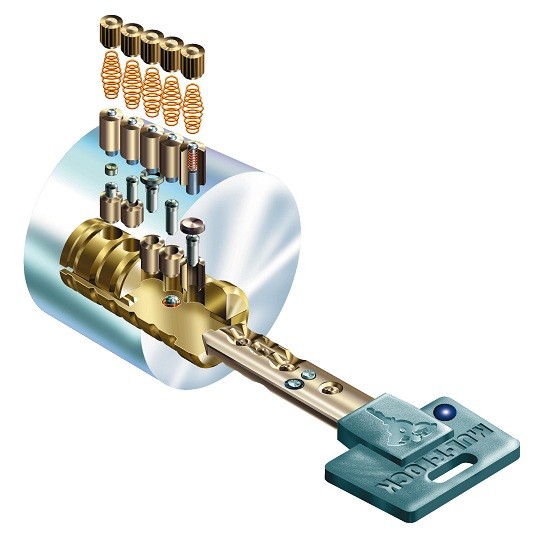
Your ignition cylinder is a wafer tumbler lock. Inside the barrel are a series of flat brass wafers pushed by springs. The cuts on your key blade lift each wafer to exactly the height at which it clears the shell, and only when every wafer is clear can the barrel rotate. The tolerances are small. The wafers are soft on purpose so they do not chew up the key.
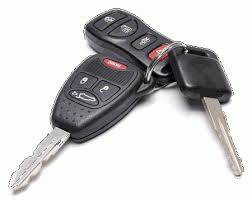
Now hang a house key, two work keys, a gym tag, a bottle opener and a fob off the end of that blade and let it dangle while you drive from Newmarket down the 404. Every bump loads the blade like a lever. The key rocks in the keyway, the wafers rub against the sides of the cuts rather than sitting in them, and over several years both the key and the wafers wear away from the profile they started with.
The result is a cylinder that a fresh key would still operate but your worn key will not, or a key that only works if you hold it up, or down, or pull it back a millimetre. Every one of those workarounds is you compensating for wear you created without knowing it. The same physics wears out the door lock you use daily, which is why we also see it on house door cylinders in older Newmarket homes.
- Keep the vehicle key separate from the household bundle. A cheap quick-release ring costs less than any repair on this page.
- A fob and one key is fine. A fob, six keys and a carabiner is a slow-motion ignition failure.
- If your key only works at a certain angle, that is wear, and it will get worse, not better.
- Graphite and spray lubricant are not fixes for wear. They mask it for a few weeks.
- Never use WD-40 in a lock cylinder. It thins the existing lubricant and attracts grit.
Releasing a bound steering lock yourself
Free, takes thirty seconds, and it is the answer more often than any part is.
Understand what is happening
When you removed the key last time, a spring-loaded bolt dropped into a notch on the steering shaft. If the wheels were turned, or parked against a curb on Main Street South, the weight of the car loads that bolt hard against the notch. The cylinder physically cannot rotate while it is pinched.
Load the wheel the other way
Grip the steering wheel and push it firmly in the direction it will still move, holding steady pressure. Do not yank it. Steady is what unloads the bolt.
Turn the key at the same time
While holding that pressure, apply gentle turning pressure to the key. Do not force it. If it does not go, release, push the wheel the other way and try again. Most bound columns free on the second or third attempt.
Check Park and the pedals
On an automatic, make sure the shifter is fully in Park rather than resting just short of it. Some vehicles also want the brake pedal pressed, and a manual will want the clutch down. These interlocks are easy to overlook in the dark.
If the key still refuses after several honest attempts, stop. The most expensive version of this fault is a snapped blade left inside a cylinder, and that happens almost exclusively at the point where someone decides to apply real force. Extraction is straightforward when the key is intact and considerably less so when half of it is a centimetre down the keyway.
Cylinder, switch or key, and why we rebuild rather than replace
There are three separate things bundled together at the top of your steering column, and they fail in different ways. The lock cylinder is the mechanical part your key goes into. Behind it sits the ignition switch, an electrical block that the cylinder rotates through a small link or rod. The key itself is the third variable and it is the one people forget.
A rough guide: if the key will not physically rotate, the fault is the cylinder, the steering lock or the key. If the key rotates normally through every position but the dash stays dark or the starter never engages, the cylinder is fine and the electrical switch behind it is the suspect. If a spare key works and your usual key does not, the cylinder is probably still serviceable and your daily key is worn out.
Where the cylinder is worn, rebuilding is almost always better value than replacing. The barrel comes out of the column, the wafers are stripped, and a fresh set of wafers is fitted to match the cuts on your existing key. The rebuilt cylinder goes back in and your original keys still work, along with every spare hanging in your kitchen. Replace it instead and you get a new cylinder keyed to a new key, which means your door locks and your ignition no longer match and every spare you own is scrap.
- Rebuild keeps your key set intact and costs less than replacement plus new keys.
- Rebuild is not possible where the shell itself is damaged or the tailpiece has sheared.
- On a rebuild we cut a fresh key to the original code anyway, because your worn key is half the problem.
- Electrical switch failure often shows as intermittent stalling or dash lights flickering over bumps.
- A chip fault is a different animal entirely. If the engine cranks and dies, read up on transponder keys before touching the ignition.
Ignition repair prices in Newmarket
Diagnosis first. Nobody should be quoting a cylinder replacement before knowing whether the wheel is simply bound.
| Job | What it covers | Typical range |
|---|---|---|
| On-site diagnosis | Symptom traced to key, cylinder, steering lock or switch | $60 – $110 |
| Bound steering lock released, no parts | Column freed, keyway cleaned and correctly lubricated | $60 – $120 |
| Broken key extracted from the ignition | Snapped blade removed without stripping the column | $95 – $160 |
| Ignition cylinder rebuilt to your existing key | Worn wafers replaced, all your current keys keep working | $180 – $320 |
| Ignition cylinder replaced | New cylinder fitted and a new key cut to it | $220 – $450 |
| Ignition switch replaced | Electrical switch block behind the cylinder | $180 – $400 |
| New key cut after a rebuild or replacement | Blade cut and chip programmed where the vehicle needs it | $110 – $250 |
Ranges are typical for the Newmarket area in 2026 and assume a mainstream make. European and luxury vehicles carry higher blank and tooling costs. Overnight, weekend and statutory holiday call-outs carry a premium. You get a firm price on the phone before a technician is dispatched.
Ignition work done in your driveway
Cylinder work is bench work, and the bench is in the van. Column trim off, barrel out, wafers rebuilt, barrel back in, tested. It happens where the car is, because a vehicle with a dead ignition is not driving anywhere and towing it is a cost with no benefit. Most Newmarket addresses are reached in twenty to thirty minutes.

If you are reading this while standing outside a car you cannot get into, that is a different call. The car lockout service opens the door first and we look at the ignition once you are sitting down.
Why call us for an ignition problem
Where we repair ignitions
Newmarket is the base and most calls in town are twenty to thirty minutes out. We also cover the surrounding towns daily, which matters on this job because a car with a failed ignition genuinely cannot be brought to anybody.
Frequently asked questions
My key will not turn in the ignition at all. What do I try first?
Hold the steering wheel and push it firmly in the direction it still moves, then apply gentle turning pressure to the key at the same time. A bound steering lock is the most common cause and it is free to fix. Also confirm an automatic shifter is fully in Park and try your spare key. If none of that works, stop before you snap the blade.
Can a heavy keyring really wreck an ignition?
Yes, and it is the commonest cause of premature wear we see. The blade acts as a lever every time the car goes over a bump, which wears both the key cuts and the soft brass wafers inside the cylinder. After a few years the key no longer lifts the wafers to the right heights and the barrel will not turn. Splitting the vehicle key onto its own ring prevents it entirely.
My key turns partway and then stops. What does that mean?
If it reaches accessory or on but will not go to start, look at two things. Mechanically, a wafer may not be clearing on the last part of the rotation. Electrically, the switch behind the cylinder may be failing. There are also interlocks on some vehicles that want the brake pedal or the clutch pressed. We can tell which it is on site in a few minutes.
The key spins all the way around and nothing happens.
That means the cylinder is rotating but is no longer connected to anything behind it. Usually the cam or tailpiece at the rear has sheared, or a retaining clip has failed. The car will not start no matter how you turn the key. It is a column-off repair rather than anything you can fix from the driver seat, and it needs a technician with the trim tools.
Is it the ignition cylinder or the ignition switch?
A rough rule: if the key will not physically rotate, suspect the cylinder, the steering lock or the key. If the key rotates through all positions normally but the dash stays dark or the starter never engages, suspect the electrical switch behind the cylinder. Intermittent stalling and dash lights flickering over bumps also point at the switch rather than the lock.
Can you repair the ignition so my existing keys still work?
That is our default approach where the cylinder allows it. The barrel is stripped, a fresh set of wafers is fitted to match the cuts on your current key, and the rebuilt cylinder goes back in. Your original key and every spare you own keep working, and your door locks stay matched to the ignition. It is normally cheaper than replacing the cylinder and buying new keys.
Do you have to tow my car for ignition repair?
No. Almost all of this work is done at the vehicle, on your driveway or wherever it is parked. Column trim comes off, the cylinder comes out, the rebuild happens on a bench in the van, and it goes back together on the spot. Towing an immobile car to a shop is a cost that adds nothing to the repair itself.
Related locksmith services in Newmarket
Key stuck in the ignition, or not turning at all?
Describe what the key is doing and we will tell you what it usually means before anybody is dispatched. If it needs a technician, one is with you at the vehicle in twenty to thirty minutes across Newmarket.