
Rental Property Lock Change Newmarket
Turnover rekeying between tenants, master key systems for multi-unit buildings, and per-unit pricing that works across a portfolio.

Quick answer
A rental property lock change in Newmarket is normally a turnover rekey: the unit cylinder is re-combinated between tenancies so the outgoing tenant’s keys stop working. It runs $75 to $130 for a single unit and $45 to $85 per unit at volume. Multi-unit buildings are usually better served by a master key system.
If you own rental property in Newmarket, the lock change is a recurring cost that most landlords either overpay for or skip entirely. Both are avoidable.
Overpaying looks like buying a new deadbolt every time a tenant leaves. Skipping looks like handing the same key to a fourth tenant and hoping the previous three did not cut copies. The correct answer sits in between: a rekey at every turnover, priced per unit, scheduled around the vacancy window rather than as an emergency.
This page covers turnover rekeying, master keying for multi-unit buildings, keeping the cost down across a portfolio, and — carefully, as general information rather than legal advice — what Ontario’s rules actually say about changing locks on a rented unit.
Turnover rekeying: the routine job
The moment a tenancy ends, every key that tenant ever cut is unaccounted for. Not because tenants are dishonest, but because keys get copied for partners, family, roommates, dog walkers and friends over a two or three year tenancy, and nobody keeps a list. Collecting the two keys you issued proves nothing about the four that were cut at a hardware counter.
Rekeying the unit cylinder between tenancies resolves that completely. The plug is re-combinated to a new pattern, new keys are cut, and every previously issued or copied key stops working. It is fifteen minutes per cylinder on conventional hardware and under a minute on SmartKey cylinders.
What it is not is a lock change in the sense of new hardware. Unless the deadbolt is genuinely worn out or throws less than an inch, the existing lock is fine and only the combination needs to change. That distinction is where the money is: $75 to $130 to rekey against $170 to $300 to replace, for exactly the same outcome in terms of who can get in.
The right time to book it is during the vacancy window, alongside the paint and the cleaning, when access is easy and nobody is inconvenienced. Booked that way it is a scheduled daytime job at daytime rates.
- Rekey between every tenancy, without exception, including friends and family tenants
- Rekey the unit door and any private entrance, not just the front
- Issue a fixed number of keys and record it in the tenancy documents
- Stamp or tag keys by unit so a returned key can be verified
- Rekey immediately if a tenant reports keys lost or stolen mid-tenancy
- Keep the master or landlord key on a controlled ring, never on a shared hook in a utility room
- Budget rekeying as a routine turnover cost alongside cleaning, not as an emergency expense
Ontario rules, in general terms
General information only. Every situation differs, so confirm your own with the Landlord and Tenant Board or a lawyer.
Ontario’s Residential Tenancies Act sets out rules about locks on rented units, and both sides of the relationship are covered. Two points are worth stating plainly, because they come up on almost every landlord call we take.
A landlord cannot lock a tenant out. Changing the locks on an occupied unit to prevent a tenant from entering — over unpaid rent, a dispute, or anything else — is not a remedy available to a landlord under the Act. Ending a tenancy and recovering possession runs through the Landlord and Tenant Board and, if it gets that far, the Sheriff. This is not a grey area, and it is the one thing we will decline to do: we do not change the locks on an occupied unit at a landlord’s request without clear authority to do so.
A tenant generally cannot change the locks without the landlord’s consent, and equally a landlord generally cannot change them during a tenancy without giving the tenant a replacement key. The intent is that both parties keep the access they are entitled to for the duration of the tenancy.
Turnover rekeying sits outside all of this, because the tenancy has ended and the unit is vacant. That is the clean, uncontroversial time to do it, and it is when the large majority of this work happens.
None of the above is legal advice, and the Act has detail and exceptions that a paragraph cannot cover. If your situation involves an occupied unit, a dispute, or a tenant who has stopped responding, get advice on your specific circumstances before anyone touches a lock.
Master key systems for multi-unit buildings
Once a property has more than about four units, individual unrelated keys stop making sense. A superintendent carrying eleven keys on a ring, guessing at which one fits, is a system that wastes time every single day and falls apart the moment a key is lost.
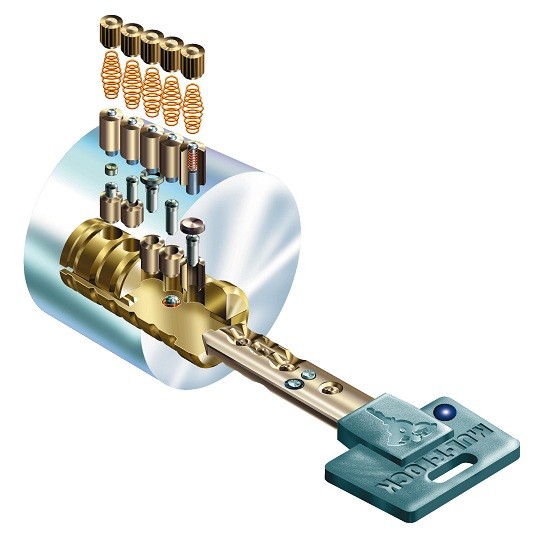
A master key system solves it by pinning each cylinder to accept two different keys: the tenant’s key, which opens only that unit, and a master key that opens every unit plus the common areas. Physically this is done with master wafers in the pin chambers, giving each stack two valid heights instead of one.
Well-designed systems go further than two levels. A typical Newmarket walk-up might have tenant keys at the bottom, a floor or wing key in the middle, and a grand master at the top held by the owner. Cleaners get common-area access only. The master key system installation page covers the design side in detail.
Tenant key
Opens that unit and the building entrance. Nothing else. Rekeyed at every turnover without disturbing the master.
Master key
Held by the owner or property manager. Opens every unit for legitimate entry with proper notice, plus mechanical and common areas.
Sub-master
For a superintendent or a cleaning contractor. Common areas and laundry, no unit access, or one wing only.
Restricted keyway option
On a restricted system, blanks are controlled and keys cannot be copied at a hardware counter. Worth it on a building where key control has already failed once.
One warning: a master system built casually will produce cross-keying, where a tenant’s key accidentally opens another unit. That is a design failure, not bad luck, and it comes from adding units to a system that was never charted properly. Any master system worth having is charted on paper before a single pin is set, and the chart is kept.
The other honest caveat is that master keying slightly weakens each cylinder, because two valid heights per pin stack means more shear points. On a normal residential building that is an acceptable trade for the operational gain. On a building where the entry door is the only real barrier, pair it with a restricted keyway.
Rental lock change prices in Newmarket
Volume is the lever here. Rekeying eight units in one visit costs far less per unit than eight separate call-outs, because the call-out is the expensive part, not the pinning.
| Job | Scope | Typical range |
|---|---|---|
| Single unit turnover rekey | One cylinder, two keys cut | $75 – $130 |
| Unit with two cylinders | Entry plus private door, keyed alike | $100 – $175 |
| 3–5 units, one visit | Per unit, all rekeyed same day | $55 – $95 per unit |
| 6+ units, one visit | Per unit, volume rate | $45 – $85 per unit |
| Scheduled portfolio account | Booked turnovers across the year | Quoted per property |
| Master key system design | Charting and pinning, per cylinder | $65 – $120 per cylinder |
| Restricted keyway conversion | Controlled blanks, per cylinder | $140 – $260 per cylinder |
| Deadbolt replacement, per door | Grade 2 bolt where the old one is finished | $170 – $300 |
| Common area or laundry rekey | Per cylinder | $60 – $110 |
| Emergency rekey, after hours | Lost or stolen keys, out of hours | $180 – $300 |

Ranges are typical for a Newmarket address in 2026 and cover labour plus standard hardware. Overnight, weekend and statutory holiday call-outs carry a premium. A firm price is confirmed on the phone before anyone is dispatched.
Keeping the cost down across a portfolio
Batch your turnovers
If two units flip in the same month, book them on one visit. The per-unit rate drops from $75-plus to the $45 to $85 band because you are paying for one call-out instead of two. Landlords with several Newmarket properties often batch quarterly.
Standardise the hardware
One brand and one keyway family across the portfolio means one set of pinning stock, faster visits and interchangeable cylinders between units. Mixed Schlage and Weiser across six buildings costs you money on every single call.
Rekey, do not replace
Replace hardware only when the plug is worn, the throw is short or the finish has failed. Rekeying is a third of the price and delivers the identical security outcome at turnover.
Keep spare pinned cylinders on hand
On a larger portfolio, a small stock of pre-pinned cylinders lets a unit be turned over by swapping a cylinder in two minutes. The old cylinder goes back for re-combinating at the next scheduled visit.
One more practical point: units where the entry door hardware is shared with a commercial tenant, or where a storefront sits below apartments on Main Street South, usually need a different approach again. That is closer to commercial lock change work, with panic hardware and closers in the mix.
Why Newmarket calls us first
Rental work across Newmarket and the area
Newmarket’s rental stock splits into basement and secondary suites through the subdivisions, purpose-built walk-ups near Yonge and Davis, apartments above the storefronts on Main Street South, and single-family homes rented whole out through Aurora and East Gwillimbury. Keswick and Georgina add a seasonal rental layer with its own turnover pattern. All of it is covered from the Newmarket base.
Frequently asked questions
How much does a rental lock change cost in Newmarket?
A single unit turnover rekey is $75 to $130 including new keys. Three to five units done on one visit drop to $55 to $95 per unit, and six or more to $45 to $85 per unit. Master key system pinning is $65 to $120 per cylinder. Replacing hardware rather than rekeying runs $170 to $300 per door.
Do I have to change the locks between tenants in Ontario?
There is no blanket legal requirement to do it, but it is standard practice and strongly advisable. Over a tenancy, keys get copied for partners, family and friends without anyone tracking it, so collecting the keys you issued proves very little. A turnover rekey costs less than most cleaning invoices and removes the question entirely.
Can a landlord change the locks to keep a tenant out?
No. Under Ontario’s Residential Tenancies Act a landlord cannot lock out a tenant who is in possession, whatever the dispute. Ending a tenancy and recovering possession goes through the Landlord and Tenant Board and, where necessary, the Sheriff. This is general information rather than legal advice, and we do not rekey occupied units at a landlord’s request.
Can a tenant change the locks on their unit?
Generally not without the landlord’s consent, and equally a landlord generally cannot change them mid-tenancy without giving the tenant a key. The intent of the rules is that both sides keep the access they are entitled to while the tenancy runs. Situations vary, so confirm your own with the Landlord and Tenant Board rather than relying on a summary.
What is a master key system and do I need one?
Each unit cylinder is pinned to accept two keys: the tenant’s, which opens only that unit, and a master held by the owner or manager, which opens everything. Below about four units it is usually unnecessary. Above that, the time a superintendent saves and the simplicity of key control make it worth the setup cost.
Can tenant keys be stopped from being copied?
Only with a restricted keyway. Standard blanks are sold everywhere and any hardware counter will cut one. A restricted system uses a controlled blank that is not available on the open market, so copies can only be authorised by the owner. It costs $140 to $260 per cylinder to convert and is worth it where key control has already failed once.
A tenant lost their keys mid-tenancy. What now?
Rekey that unit promptly and issue new keys to the tenant. It is the same fifteen-minute job as a turnover rekey. Who pays is a matter for the tenancy agreement and the circumstances rather than something we decide. If it is out of hours and the unit cannot be secured, it is treated as an emergency at $180 to $300.
Can you do several units in one visit?
Yes, and that is the cheapest way to buy this. The call-out is the expensive part, so rekeying six units on one morning costs far less per unit than six separate visits. Landlords with multiple Newmarket properties often batch turnovers quarterly and book them as a single scheduled appointment.
Related locksmith services in Newmarket
Book turnover rekeys the cheap way
Call 866-820-1331. Tell us how many units and when they are vacant, and you will get a per-unit price on the call.