
Panic Bar Installation in Newmarket
Exit devices supplied, fitted and repaired on commercial and industrial doors across Newmarket. Rim, mortise and vertical rod, fire-rated or panic-only, sized to the door you actually have.
Quick answer
Panic bar installation in Newmarket covers rim, mortise and vertical rod exit devices on commercial doors. A single device supplied and fitted typically runs $650 to $1,900 depending on type and whether it is fire-rated. Your fire inspector sets what your building needs. Call 866-820-1331.
A panic bar exists for one moment that most buildings never have. Somebody pushes, the door opens, and nobody has to think about it. That is the whole design brief: a device that releases under pressure from a crowd, from a person carrying something, from a person who cannot see. Everything else about exit hardware follows from that one requirement.
Panic bar installation in Newmarket is mostly driven by three things: a fire inspection that flagged a door, a change of use where a unit becomes an assembly or higher-occupancy space, and plain wear — a device that has been pushed a quarter of a million times and now sticks halfway. We handle all three, on retail units along Davis Drive, on schools and community buildings, and on the industrial stock out toward Highway 404.
An honest note before anything else. We fit and service the hardware, and we know it well. We do not decide what your building is required to have. That is your fire inspector, your building official or the authority having jurisdiction for your property, and if your requirement is at all unclear the right move is to ask them and then call us with the answer. We will happily talk through options so the conversation with them is a short one.
The three device types and which door takes which
Exit devices are named for how the latch engages the frame. The door decides, not preference.
Rim device
Latch throws into a surface-mounted strike on the frame. Simplest, cheapest, most common. Suits single doors and the active leaf of a pair with a mullion. Most Newmarket back doors and small retail exits are rim.
Mortise device
Latch runs into a mortise lock body pocketed into the door edge. Cleaner appearance, better security, more machining. Common on main entrances where the door is already prepped for a mortise lock.
Vertical rod
Latches at the top of the frame and at the floor, driven by rods in the door. The answer for a pair of doors with no centre mullion. Available as surface rod or concealed rod inside the door.
Mullion and pairs
A removable mullion lets you fit cheap rim devices on a pair. It has to come out to move wide loads, which is exactly why some sites choose vertical rod instead.
Concealed vertical rod looks better and gets abused less, but when it goes wrong the whole door has to come apart. Surface vertical rod is ugly and easy to service. On a busy loading door we usually argue for surface rod, and on a front entrance for concealed. That trade-off is worth a two-minute conversation before anything is ordered.
Fire-rated versus panic-only — a real difference
Two devices can look identical on the wall and be completely different products. A panic-only device is allowed to have a mechanism that holds the latch retracted so the door can be left free-swinging. A fire exit device is not, because a fire door must latch every time it closes. A fire door that swings shut but does not latch is just a piece of wood in a doorway.
Fire-rated devices are also supplied without a bottom rod strike into the floor in many configurations, and they are matched to a rated door assembly — leaf, frame, hinges, closer and hardware are all part of the rating. Fitting a panic-only bar to a rated door is a common and expensive mistake, because it invalidates the assembly and an inspector will catch it.
If the label on the edge of your door says fire rated, the hardware on it has to be too, and it needs a self-closing device that will actually drive the latch home. That is why door closers and exit devices are so often replaced in the same visit.
- Fire exit devices never dog — the latch must project whenever the door closes
- Panic-only devices may dog, which is useful on a door held open during trading hours
- Rated assemblies include the door, frame, hinges, closer and the device together
- Labels live on the hinge edge of the door and the rabbet of the frame — check both
- Never fit a floor strike to a fire-rated vertical rod door unless the listing allows it
- Your fire inspector or AHJ has the final say on your specific opening
Dogging, delayed egress and alarmed exits
Dogging means holding the push bar depressed so the latch stays retracted and the door push-opens freely. Hex dogging uses an allen key in the end cap; cylinder dogging uses a small key cylinder so only key-holders can do it. Shops use it to run a door as a free entrance during trading and then undog at close. Handy, and completely off-limits on a fire door.
Delayed egress is a device that holds the door for a set interval after somebody pushes, sounds a local alarm, then releases. It exists for loss prevention and for buildings where an uncontrolled exit is a genuine safety issue. It is heavily conditional — it needs a fire alarm interface that releases the door instantly, power supply, signage and, critically, approval from the authority having jurisdiction. Do not fit one on the strength of a website page, including this one. Ask first.
Alarmed exit devices are the simpler cousin: the bar carries a battery or wired sounder that shrieks when the door is used, but the door releases immediately. That is what most Newmarket retailers actually want on a fire exit that staff keep using as a smoke break door. Around $420 to $900 fitted, and it stops the behaviour within a week.
What goes wrong with exit devices
The latch stops projecting fully
Grease dries out, the mechanism gums up, and the latch only comes half way. Door looks shut, is not secure. Service and lubrication usually restores it.
Rods drift out of adjustment
On vertical rod devices the top and bottom latches must engage together. As the door settles, one stops reaching. Adjusting rod length is a normal maintenance task, not a fault.
Dogging seized open
A device dogged for years will not undog cleanly because the mechanism has worn in that position. Sometimes freeable, often a replacement.
The trim is broken, not the bar
Outside lever or pull trim takes the most abuse. Replacing trim is far cheaper than replacing the device, and it is frequently all that is needed.
The one failure we will not patch is a bar that does not release under a straight push. If a device is unreliable in that one respect it comes off and a new one goes on the same visit, because there is no acceptable version of a stuck exit. We carry rim devices in common widths for exactly that reason.
Panic bar and exit device prices in Newmarket
Exit hardware has a wide price band because the products do. A basic rim device on a single hollow-metal door and a fire-rated concealed vertical rod set on a pair of glass entrance doors are not the same purchase.
| Work | Typical time | Price range (CAD) |
|---|---|---|
| Service and adjust an existing device | 45 – 90 min | $130 – $260 |
| Rim exit device supplied and fitted | 1.5 – 2.5 hrs | $650 – $1,150 |
| Fire-rated rim device supplied and fitted | 1.5 – 2.5 hrs | $780 – $1,350 |
| Mortise exit device supplied and fitted | 2 – 3 hrs | $950 – $1,700 |
| Surface vertical rod device, per leaf | 2 – 3 hrs | $900 – $1,600 |
| Concealed vertical rod device, per leaf | 3 – 4 hrs | $1,200 – $1,900 |
| Removable mullion for a pair of doors | 1 – 2 hrs | $420 – $850 |
| Alarmed exit device fitted | 2 – 3 hrs | $420 – $900 |
| Outside lever or pull trim replaced | 45 – 90 min | $180 – $420 |
| Exit device cylinder replaced or rekeyed | 20 – 40 min | $90 – $210 |
| Delayed egress device with alarm interface | half day+ | quoted after site visit |
Ranges are typical for Newmarket in 2026 and cover labour plus standard commercial-grade parts. Overnight, weekend and statutory holiday call-outs carry a premium. A firm price is confirmed on the phone before a technician is dispatched.
Exit hardware on Newmarket buildings
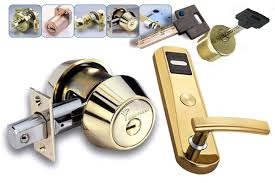

We fit and service exit hardware on retail units and restaurants downtown and along Davis Drive, on warehouses and light industrial off Harry Walker Parkway and Highway 404, on community and recreation buildings, on churches and halls, and on multi-tenant office buildings where the stairwell doors matter as much as the entrance.
Exit devices rarely travel alone. If the door has an electric release for after-hours access that is an electric strike question, and if staff need fob entry through the same opening see access control. The full commercial picture is on the commercial locksmith page.
How we approach exit hardware
Exit device service around York Region
We fit and maintain panic hardware across the towns around Newmarket. Scheduled servicing before winter is the most common booking, because devices stiffen in cold and that is when latches stop projecting.
Frequently asked questions
Does my business need a panic bar?
That depends on occupancy, use and the door in question, and it is decided by your fire inspector or the authority having jurisdiction — not by a locksmith and not by a website. Ask them what your specific opening requires. Once you have that answer we will fit hardware that satisfies it, and we can talk through the options beforehand so the conversation is quick.
What does panic bar installation cost in Newmarket?
A rim device supplied and fitted runs $650 to $1,150, fire-rated $780 to $1,350. Mortise devices are $950 to $1,700. Vertical rod for a pair of doors runs $900 to $1,900 per leaf depending on whether the rods are surface or concealed. Servicing an existing device is $130 to $260.
Can I lock a panic bar so people cannot come in from outside?
Yes, and that is normal. The outside trim can be keyed, or there can be no outside trim at all — a blank plate. The bar still releases from the inside with a push at all times. That combination is what most rear fire exits use.
What is dogging and can I use it on any door?
Dogging holds the latch retracted so the door swings freely, set with an allen key or a small key cylinder. It is fine on a panic-only device where you want a free entrance during trading hours. It is never permitted on a fire door, because a fire door has to latch every time it closes.
Our exit bar sticks and only opens if you shove it. Is that urgent?
Yes. Treat it as urgent. A device that does not release on a normal push is the one failure mode that defeats the entire purpose of the hardware. Call and we will attend the same day. Often it is dried grease and a service fixes it; if not, the device is replaced.
Can you put an alarm on a fire exit that staff keep using?
Yes, and it is one of the most requested things we do for Newmarket retailers. An alarmed exit device or a door alarm sounds whenever the door is used, while the door still releases instantly. Typically $420 to $900 fitted. It stops casual use of a fire exit without restricting it.
What about delayed egress — can you fit that?
Sometimes, but it is conditional. Delayed egress needs a fire alarm interface that releases the door immediately, a dedicated power supply, correct signage and approval from your authority having jurisdiction. We will not fit one without that approval in hand. Start by asking your inspector, then call us.
Do you service exit devices on a contract?
Yes. Multi-door sites — schools, plazas, warehouses, community buildings — usually go on a scheduled visit where every device is exercised, lubricated, adjusted and recorded. Doing that in the autumn catches most of the failures that would otherwise show up in the first hard freeze.
Related locksmith services in Newmarket
Book exit hardware for your Newmarket premises
Tell us the door width, whether it is a single or a pair, and whether there is a fire label on the hinge edge. That is enough for an accurate quote. Call 866-820-1331.