
Rekey or Replace Locks: How to Decide, and What Each One Costs
One is a twenty-minute job on the lock you already own. The other is new hardware on the door. Most people are quoted the expensive one when they needed the cheap one.
Quick answer
Rekey when the hardware is sound and you only need the old keys to stop working — lost keys, a tenant moving out, a house you just bought. Replace when the lock is worn, seized, damaged, mismatched, or too low a grade to keep. Rekeying runs about $25 to $45 per cylinder; a supplied and installed deadbolt starts near $160.
The question of whether to rekey or replace locks comes up at the same handful of moments: you bought a house, a tenant handed back one key out of three, a set went missing at the Ray Twinney Complex, or somebody left the relationship and did not leave the key. In every one of those cases the goal is identical — the old key must stop opening the door. There are two ways to get there and they are priced very differently.
Rekeying changes the lock without changing the lock. Replacing changes the hardware. A surprising number of people are sold the second when the first would have done exactly the same job for a third of the money, usually because nobody explained the difference at the door.
This page explains what re-pinning physically is, what each option costs around Newmarket in 2026, and gives you a decision table you can read in ten seconds. There is no clever answer at the end. Sometimes rekeying is obviously right, sometimes replacement is, and the tells are easy to learn.
What rekeying actually is
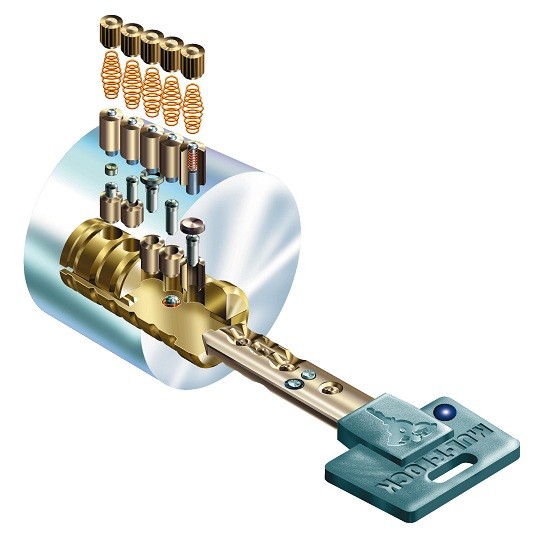
Inside a standard pin tumbler cylinder there is a row of five or six chambers. Each chamber holds a spring, a driver pin on top and a key pin underneath. When the correct key goes in, the cuts on the blade lift each stack so the split between key pin and driver pin sits exactly at the shear line — the boundary between the rotating plug and the fixed housing. Nothing blocks the plug, so it turns.
Rekeying swaps out those key pins for a different set of heights. The shear line now lines up for a new key cut and no longer lines up for the old one. The lock is physically the same lock on the same door with the same screws in the same holes. Only the pin heights changed.
On a typical residential deadbolt a technician pulls the cylinder, removes the retainer, slides the plug out on a follower so the springs and drivers stay in the housing, swaps the key pins to match a freshly cut key, reassembles and tests. Ten to fifteen minutes per lock once he is at the door, faster on the second and third because the keying is already decided.
That is also why rekeying gets cheaper per lock as the count goes up. Four cylinders on one visit is one trip, one key cut and four short jobs. If you want every exterior door on one key — front, back, garage man-door and the door from the garage into the house — that is keyed alike rekeying, and it costs no more than keying them separately.
What rekeying and replacing cost in Newmarket
| Option | Typical price | Time on site |
|---|---|---|
| Rekey one cylinder | $25 – $45 per lock, plus the service call | 10 – 15 minutes |
| Rekey four locks, keyed alike | $140 – $240 total | 45 – 60 minutes |
| Extra keys cut on the spot | $5 – $12 each | A minute each |
| Replace with a Grade 3 knob or lever set | $120 – $190 installed | 20 – 30 minutes |
| Replace with a Grade 2 deadbolt | $160 – $250 installed | 25 – 40 minutes |
| Replace with a Grade 1 deadbolt | $220 – $320 installed | 30 – 45 minutes |
| Replace with a high-security restricted cylinder | $260 – $480 installed | 30 – 45 minutes |
| Smart lock supplied and installed | $300 – $650 installed | 45 – 75 minutes |
| New bore in a door with no deadbolt | Add $80 – $150 | Add 30 minutes |
The gap is the whole argument. Rekeying a four-door house costs roughly what replacing one deadbolt costs. If your hardware is in good order, replacement buys you nothing that rekeying did not already buy — the old key is dead either way.
Prices are typical for the Newmarket area in 2026 and exclude HST. Overnight, weekend and statutory holiday call-outs carry a premium. A firm price is confirmed on the phone before dispatch. Full ranges for every service are on our Newmarket locksmith prices page.
When rekeying is the obviously right answer
You lost your keys
The hardware is fine. Somebody just has a key that opens your door and you do not know where they are. Re-pin the cylinders and the found key becomes a piece of scrap metal.
You just bought the house
The previous owner, their family, a cleaner, a contractor, a dog walker and a realtor lockbox code have all touched that key. Rekeying every exterior cylinder on move-in week is the cheapest security spend in the entire purchase.
A tenant moved out
Standard turnover practice between tenancies. Rekeying is fast, cheap enough to do every single time, and leaves the door hardware you already paid for on the door.
Too many keys in circulation
Six keys handed out over eleven years and you can account for four. Re-pin once, cut exactly the number of keys you want, and start the count again from a known number.
The common thread is that nothing is wrong with the lock. It latches, it turns smoothly, the deadbolt throws its full length into the strike. You do not have a hardware problem. You have a key-distribution problem, and rekeying is the tool built for that. Our moving-in security checklist covers everything else worth doing in that first week.
When replacement is the right call
- The lock is worn or seized. The key wobbles, sticks, needs jiggling, or the plug turns hard. Re-pinning a cylinder whose plug and shell are already worn oval gives you a fresh key on an old problem.
- You are upgrading grade. ANSI Grade 3 builder hardware on a front door is thin. Moving to Grade 2 or Grade 1 gets you a one-inch bolt, a heavier plug and screws that reach the framing — and no amount of re-pinning does that.
- There is no deadbolt at all. A latch on a knob set alone is not a lock. That needs new hardware and often a new bore.
- The finishes do not match. Three brass locks and one satin nickel one that was replaced in 2011. Rekeying will not fix your front elevation.
- The door was forced. After a break-in the cylinder is rarely the casualty — the strike, jamb and sometimes the lock body all take the load. That is burglary damage repair, not a rekey.
- You want features the old lock cannot have. Keypad entry, a smart lock, a restricted key that a hardware store cannot copy. Those are hardware decisions.
- The key blank is obsolete. Some 1980s subdivision hardware around Newmarket takes blanks that are now hard to source. Replacing is simpler than hunting.
One more that people miss: if you are already replacing one lock for any of the reasons above, ask for the rest of the house to be rekeyed to the new key at the same time. Same visit, same trip charge, one key for every door.
The decision table
Find your situation on the left. The right-hand column is what we would do at our own house.
| Your situation | Rekey | Replace |
|---|---|---|
| Lost or stolen keys, hardware is fine | Yes | Only if the lock is also failing |
| Bought a home in Newmarket or East Gwillimbury | Yes, every exterior cylinder | If any door has no deadbolt |
| Tenant turnover | Yes, every time | Every few tenancies as hardware wears |
| Key sticks, wobbles or needs jiggling | No | Yes — the cylinder is worn |
| Deadbolt does not throw fully into the strike | No | Fix the strike first, replace only if the lock is damaged |
| Builder-grade hardware on a front door | Not on its own | Yes, move to Grade 2 or Grade 1 |
| Break-in damage to door or frame | No | Yes, plus frame and strike repair |
| Want a keypad or smart lock | No | Yes |
| Want one key for every exterior door | Yes, keyed alike | Only if hardware is being changed anyway |
| Ex-partner, contractor or cleaner has a key | Yes | No |
A technician will tell you on site if a cylinder is too worn to rekey reliably — and will say so before charging you for a rekey that will not last.
How we handle rekey and replacement calls
Rekeying and lock changes across the area
We rekey and replace locks across Newmarket and the surrounding towns from the same base, typically arriving at a Newmarket address in 20 to 30 minutes. Older Main Street South century homes, 1980s and 1990s subdivision stock in Glenway and Bristol-London, and newer East Gwillimbury builds each bring their own hardware quirks, and the technician arriving has seen all three.
Frequently asked questions
Is it cheaper to rekey or replace a lock?
Rekeying, by a wide margin. Re-pinning a cylinder runs about $25 to $45 per lock plus the service call, while a supplied and installed deadbolt starts near $160 and climbs with grade. Rekeying four doors typically costs about what replacing a single deadbolt costs. Replacement only becomes the better value when the hardware itself is worn, damaged or the wrong grade.
Does rekeying make my old keys stop working?
Yes, immediately and completely. The key pins inside the cylinder are changed to different heights, so the old cuts no longer align at the shear line and the plug will not turn. Every copy of the old key ever made becomes useless the moment the technician reassembles the lock, whether you know where those copies are or not.
How long does rekeying a house take?
Ten to fifteen minutes for the first cylinder and less for each one after, because the key is already cut and the pinning is decided. A typical Newmarket house with four exterior cylinders — front, back, garage man-door and garage-to-house — is done in about 45 to 60 minutes including testing every door with the new key.
Can all my locks be rekeyed to one key?
Usually yes, as long as the cylinders share a keyway. Most residential hardware from the common brands can be keyed alike, and there is no extra labour charge for doing it. If one door has an odd cylinder that will not take the same keyway, the options are replacing that one lock or keeping it on its own key.
Should I rekey the locks when I buy a house?
Yes, in the first week. You have no way to know how many keys existed before closing, and the list usually includes previous owners, relatives, cleaners, contractors and a realtor. Rekeying every exterior cylinder is inexpensive, takes under an hour and is the single highest-value security step at move-in.
Can any lock be rekeyed?
Most standard pin tumbler locks can. Exceptions are cylinders that are badly worn, corroded or damaged, some very cheap imported hardware with no serviceable plug, and certain restricted or patented systems that require the manufacturer or an authorised dealer. A technician can tell within a minute of pulling the cylinder, and will say so rather than charging for a rekey that will not hold.
Do I need to replace my locks after a break-in?
Often yes, but the lock is rarely what failed. Forced entry usually splits the jamb and tears out the strike while the deadbolt itself is intact. Expect frame repair, a reinforced strike with three-inch screws into the framing, and replacement of any hardware that took the impact. Rekeying alone does not address a door that has already been kicked.
What is the difference between Grade 1, 2 and 3 locks?
ANSI grading measures cycle life and how much force the lock resists. Grade 3 is builder hardware, adequate on an interior or low-traffic door. Grade 2 is a sensible residential exterior standard. Grade 1 is commercial duty — a full one-inch bolt, a heavier plug and better resistance to prying and kicking. On a front door, Grade 2 is the practical minimum.
Related locksmith services in Newmarket
Not sure which one your door needs?
Call 866-820-1331, describe the lock and what happened, and we will tell you whether it is a rekey or a replacement before we quote it. Newmarket response is typically 20 to 30 minutes, 24 hours a day.